When patients walk into our North York office asking for veneers, they are usually focused on the end result: a brighter, more symmetrical smile. As dentists, however, our focus is on the foundation and on what we have to check before veneers.
A beautiful dental veneer is only as good as the tooth and gum tissue supporting it. Placing veneers without a thorough clinical assessment is a recipe for failure, leading to chipping, debonding, or even underlying decay. Here is exactly what we evaluate at Emergency Dental Office before we even consider taking an impression.
What Our Dentists Check Before Veneers
As dentists with years of experience in cosmetic dentistry, we have come up with an essential pre-veneer checklist that we apply to all our patients. Here is the checklist:
1. Periodontal Status (Gum Health)
The health of your gums is the most overlooked factor in cosmetic success. We look for quiet inflammation, like gums that might bleed slightly during brushing or appear slightly dusky in color.
If we place a veneer margin against an inflamed gum line, two things happen: the bond is contaminated by moisture, and once your gums eventually heal and shrink back to their healthy position, a dark gap will appear between the veneer and your gum line. We ensure your periodontium is stable before proceeding.
2. Structural Integrity and Silent Decay
A veneer is an aesthetic face, not a structural support. During your exam, we use high-resolution digital X-rays to check for decay between teeth and under old fillings.
If a tooth has a large existing restoration or a cavity, the internal structure may be too weak to support a thin porcelain shell. In these cases, we must determine whether a dental crown—which protects the entire tooth—is a safer, more predictable option for your long-term health.

3. Bite Analysis (Occlusion) and Wear Patterns
How your teeth meet when you chew or speak dictates the lifespan of your veneers. Porcelain is incredibly strong under vertical pressure but can be brittle under shear forces. If you have an edge-to-edge bite or a history of bruxism (teeth grinding), you could potentially pop a veneer off or chip the incisal edge within weeks.

We analyze your wear facets to see if your bite needs to be adjusted first, or if a protective nightguard will be a mandatory part of your post-treatment care.
4. Available Enamel for Bonding
The magic of modern veneers lies in the bond between porcelain and enamel. This bond is one of the strongest in all of medicine. However, if a patient has significant acid erosion or has worn their teeth down to the dentin (the yellowish layer under the enamel), the bond strength drops by nearly 50%.
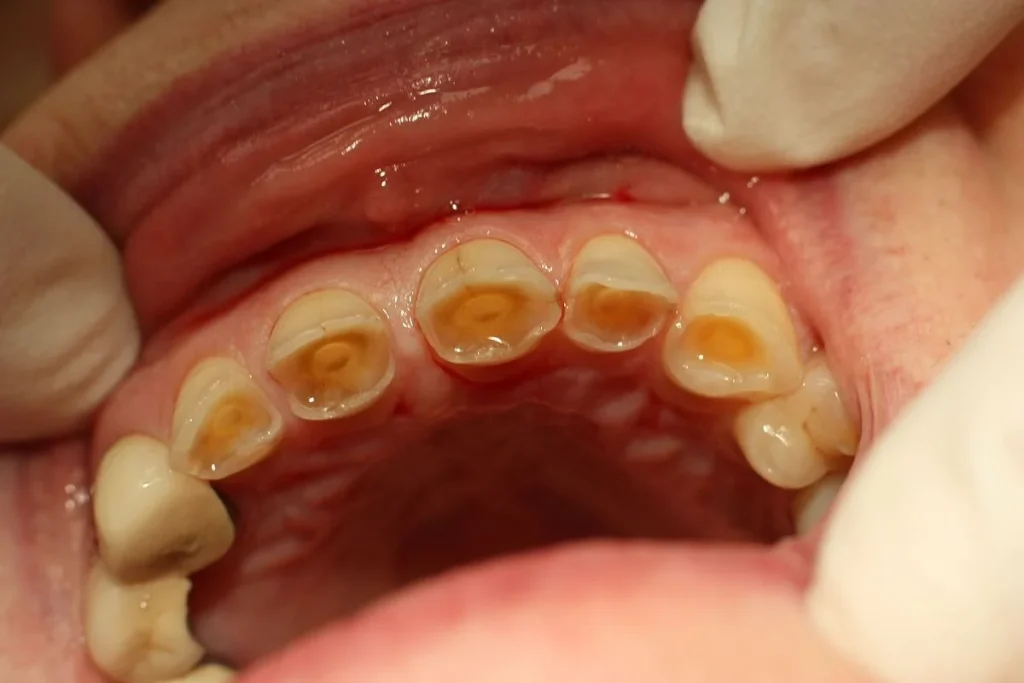
We must verify that you have enough healthy enamel to ensure the veneers stay fused to your teeth for the next 10 to 20 years.
5. Facial Symmetry and the Golden Proportion
A smile doesn’t exist in isolation; it must harmonize with your facial midline and your lip line, leading to what is called “the Golden Ratio“. We use digital smile design to ensure the veneers don’t just look like nice teeth, but like your teeth. This involves checking how much of your teeth show when your face is at rest versus when you are in a full smile.
Why a Professional Consultation is Vital
A consultation at our Toronto office is a diagnostic event. It is during this time that we utilize 3D intraoral scans to create a digital mock-up of your potential results. This allows you to see the projected outcome and allows us to calculate the exact amount of prep required.
We also determine whether you are a candidate for “No-Prep” veneers or if traditional veneers are required to correct deeper issues like severe discoloration or significant crowding.
What Happens if You Skip These Checks?
Skipping the diagnostic phase is why veneer failure happens. Without these checks, patients often face:
- Chronic Sensitivity: If veneers are placed on teeth with insufficient enamel.
- Recurrent Decay: If silent cavities weren’t treated before the veneer was bonded.
- Premature Failure: Veneers chipping or falling off because the bite wasn’t properly calibrated.
Discover if Veneers Are the Right Path for Your Smile
Veneers are a big decision, and you deserve honest, clinical advice. Schedule a one-on-one consultation with our expert dentists at Emergency Dental Office to discuss your goals, check your suitability, and discover the best path to your ideal smile.
When Veneers Aren’t the Right Choice
There are some cases where, during examinations before veneers, we find this treatment option inappropriate for you. The most common causes we face are as follows:
Insufficient Enamel for Bonding
The long-term success of a veneer depends almost entirely on the bond between the porcelain and your natural enamel. As we have discussed in our clinical assessments, bonding to enamel is significantly stronger than bonding to the underlying dentin.
If a patient has severe acid erosion (from GERD or diet) or has worn their teeth down through years of heavy grinding, there may not be enough enamel left to create a reliable seal. In these cases, a veneer is likely to debond or fall off. A full-coverage crown is usually the safer choice here as it protects the entire tooth structure.
Severe Malocclusion (Misaligned Bite)
Veneers are excellent for masking minor crowding or small gaps. However, they cannot fix “skeletal” bite issues. If you have a severe overbite, underbite, or crossbite, the functional forces of your jaw will put immense pressure on the porcelain.
If we place veneers on teeth that are significantly out of position, the patient often ends up chipping or snapping the porcelain within the first year. In these instances, we recommend orthodontic treatment—such as clear aligners—to move the teeth into the correct position first.
Untreated Periodontal Disease
We will never perform cosmetic work on a foundation of gum disease. Periodontitis causes the bone and gums to recede. If we place veneers while the disease is active, the gum line will continue to shift, exposing the roots of your teeth and the edges of the veneers. This creates black triangles and food traps that lead to further decay. We must stabilize your gum health through deep cleaning or periodontal therapy before any cosmetic enhancements are considered.
Active Bruxism (Heavy Grinding)
Porcelain is a glass-like material. It is strong, but it is brittle. Patients who suffer from severe bruxism exert hundreds of pounds of pressure on their teeth while they sleep. If this habit is not managed, the veneers will eventually fracture. While we can often provide a custom nightguard to protect the work, patients with uncontrollable grinding habits may be better suited for different restorative materials or must commit 100% to wearing protective appliances.
Large Existing Fillings
A veneer requires a certain amount of healthy, intact tooth structure to grab onto. If your tooth already has a very large composite filling that covers more than half the tooth, there may not be enough natural surface area left for a veneer to bond to effectively. In this scenario, the tooth is structurally compromised, and a crown is necessary to prevent the tooth from fracturing under the pressure of chewing.
Better Alternatives for Veneers
If you aren’t a candidate for veneers, it doesn’t mean you can’t have a beautiful smile. Depending on your specific oral health profile, we may recommend:
- Dental Crowns: These cover the entire tooth and provide maximum protection for teeth with large fillings or significant wear.
- Orthodontics: Invisalign or traditional braces can correct the alignment of the teeth naturally, often removing the need for veneers entirely.
- Composite Bonding: For minor chips or small gaps, we can use a tooth-colored resin that requires less tooth preparation than a porcelain veneer.
- Professional Whitening: Sometimes, a simple shift in shade with a professional teeth whitening is all a patient needs to feel confident again.
Conclusion
Choosing the right cosmetic procedure is a significant decision, and sometimes that means acknowledging that veneers are not the best path forward for your specific dental anatomy. At Emergency Dental Office, our primary obligation is to your oral health and the structural integrity of your teeth.
A successful transformation starts with an honest conversation and a thorough clinical evaluation. If you are ready to explore the best way to achieve your aesthetic goals while protecting your biological foundation, we are here to guide you through every step of the process.
FAQ
Are veneers permanent?
Yes, because the process typically involves removing a small layer of natural enamel to ensure a proper fit, the procedure is considered irreversible.
Does getting veneers hurt?
The procedure is generally painless. We use local anesthesia during the preparation phase to ensure you are comfortable, though some patients experience mild sensitivity for a few days after placement.
How long do porcelain veneers last?
With proper care and regular dental checkups, porcelain veneers can last between 10 to 20 years before they need to be replaced.
Can I still get a veneer if I have a cavity?
Not immediately. All decay must be removed, and the tooth restored with a filling or core buildup before a veneer can be safely bonded to the surface.
What happens if a veneer chips?
While porcelain is very durable, it can chip under extreme force. Depending on the size of the chip, it may be repaired with composite resin, but often the entire veneer must be replaced to restore its structural integrity.
Have questions about pre-veneers steps?
Share your concern below, and our team will respond with guidance.