Whether it’s wisdom tooth extraction, dental implants, jaw surgery, or any other reason that your dentist decided oral surgery is right for you, taking the right steps beforehand minimizes complications and speeds up recovery. A little preparation goes a long way in ensuring you feel comfortable and stress-free. In this blog, we’ll cover everything you need to know about how to prepare for oral surgery and what to expect during the procedure.
Pre-Surgery Tips for a Smooth Procedure
Sometimes, oral surgeries are the last option when less aggressive treatments don’t work. When it becomes the only option, getting ready for it may feel a little nerve-wracking. However, a bit of preparation can really help make the whole process go smoothly. Here are some simple but important tips to follow before your appointment.
1. Follow Your Dentist’s Instructions
Your dentist or oral surgeon will give you specific instructions based on the type of surgery you’re having. This might include when to stop eating and drinking or how to take your medications. For example, if you’re going under general anesthesia, you’ll likely need to avoid food and drinks for at least 8 hours before your surgery.
2. Arrange for a Ride Home
If you’ll be sedated or given anesthesia, you won’t be able to drive yourself home safely. Ask a friend or family member to come with you or pick you up afterward. Additionally, it’s a good idea to have someone stay with you for a few hours post-surgery, just in case you feel dizzy or groggy.
3. Wear Comfortable Clothing
Choose loose, comfy clothes for your appointment, especially something with short sleeves if you’ll be getting an IV. You’ll feel more relaxed, and it’ll be easier for your care team to work.
Based on Our Patients’ Experiences
One patient explained to our dentist that bringing a cozy hoodie and warm socks helped them feel calmer and less anxious before surgery.

4. Don’t Skip Brushing (But Be Gentle)
It’s still important to brush your teeth the morning of your surgery unless your dentist says otherwise. Just avoid swallowing any water and be extra gentle around sensitive areas. Don’t forget that clean teeth lower the risk of infection during and after the procedure, so it’s a small step that makes a big difference.
5. Prepare a Soft Food Plan
Stock up on soft foods you can eat easily after your surgery, like yogurt, mashed potatoes, smoothies, and soup. Planning ahead means you won’t have to worry about food when you’re sore and tired. Be careful to avoid anything too hot, crunchy, or spicy for the first few days.
6. Relax and Get a Good Night’s Sleep
Try to get plenty of rest the night before your surgery. Feeling well-rested can reduce your stress and help your body recover better. If you’re nervous, doing some light breathing exercises before bed or listening to calming music can help you wind down.
Need Oral Surgery? We’re Here to Help!
Oral surgery can feel overwhelming, but it doesn’t have to be stressful with the right preparation. If you need expert care, Emergency Dental Office is here for you. From extractions to implants, we provide top-notch care focusing on comfort and quick recovery.
What to Expect During and After the Surgery
It’s completely normal to feel a little anxious before oral surgery, especially if it’s your first time. But the more you know about what’s going to happen, the more confident and calm you’ll feel going in. This section will walk you through what typically happens during the procedure and what you can expect in the hours and days that follow, so there are no surprises, just peace of mind.
During the Surgery
Most oral surgeries don’t take too long; many are done in under an hour, depending on the procedure. Before it starts, your oral surgeon will make sure you’re comfortable. You might be given local anesthesia (to numb the area), sedation, or general anesthesia, depending on what type of surgery you’re having.
Important Note
You won’t feel pain during the surgery, but you may feel a bit of pressure or movement. If you’re awake and feeling nervous, just let your surgeon know; they’re used to helping patients stay calm.
Right After the Surgery
Once the procedure is done:
- You’ll be taken to a recovery area where the team will monitor you until the anesthesia wears off.
- You might feel sleepy, numb, or a little confused at first; totally normal.
- A nurse or assistant will give you some aftercare instructions to manage pain, swelling, and bleeding before you go home.

Later That Day
When you get home, your job is to rest. Your mouth may feel sore and a little swollen. Some light bleeding is normal for the first few hours. You’ll probably want to take it easy for the rest of the day; no heavy lifting, no running errands, just lots of relaxing.
Based on Our Patients’ Experiences
Many people find it helpful to set up a little “recovery station” on the couch or bed with water, soft snacks, meds, and something to watch.
The Next Few Days
Pain and swelling usually peak within 24 to 48 hours and then start to get better. You may be given antibiotics or painkillers; make sure to take them exactly as directed. Sticking to soft foods, avoiding straws, and keeping your mouth clean (gently!) are the best ways to help your body heal.
If anything feels off, like a fever, increasing pain, or something just doesn’t seem right, don’t wait. Call your dentist or surgeon as soon as possible.
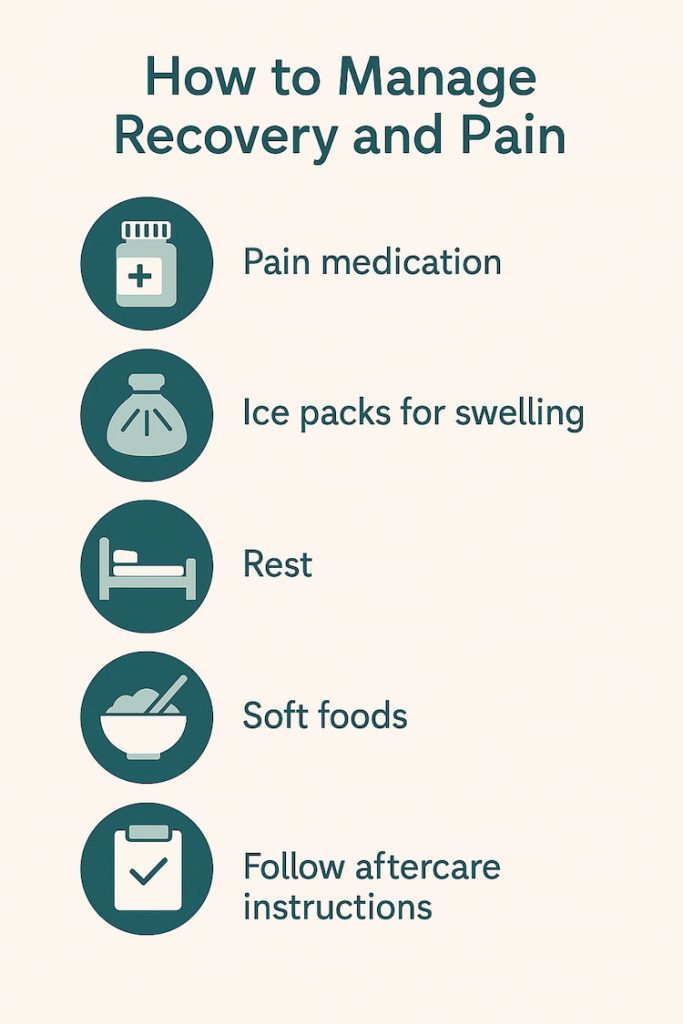
How to Manage Recovery and Pain
The first few days are crucial for healing. According to an article on WebMD, your recovery depends on how severe your disease is, your overall health, and the type of procedure you had. So take it easy, follow these tips suggested in the article, and let your body recover at its own pace.
- Take your pain medication on schedule. Don’t wait for the pain to start; stay ahead of it.
- Use ice packs for swelling. Apply them for 15 to 20 minutes at a time during the first 24 to 48 hours.
- Get plenty of rest, avoid heavy activity, and give your body time to heal.
- Eat soft, healing foods and avoid hot, spicy, or crunchy foods.
- Avoid using straws, as suction can interfere with healing and cause complications.
- Your dentist’s guidance is based on your specific procedure. So, follow all aftercare instructions.
Why Preparing for Oral Surgery is Crucial
Preparing for oral surgery isn’t just about showing up on time, but setting yourself up for the smoothest, safest experience possible. When you follow pre-surgery instructions, plan your recovery space, and know what to expect, you help reduce the risk of complications and make healing faster and more comfortable. A little planning can ease anxiety, prevent last-minute stress, and give you peace of mind knowing you’re fully ready for the procedure.
Conclusion
With the proper preparation and care, you’ll be on your way to a smooth oral surgery and a healthy recovery. From following pre-surgery tips to knowing how to manage pain and swelling afterward, every small step helps you feel more in control and confident about the process.
At Emergency Dental Office, we’re here to support you from start to finish. Our experienced and compassionate team is ready to restore your dental health and help you return to your everyday life. If you need a dental checkup, are thinking about oral surgery or just want to know more about our dental services, contact us today! We’re just a call or click away.
FAQs
-
How do I prepare my body for oral surgery?
Start by taking care of your basic needs; stay well-hydrated, get plenty of rest the night before, and follow any fasting or medication instructions your dentist gives you. Avoid smoking and drinking alcohol for at least 24 to 48 hours before the procedure, as they can interfere with healing and anesthesia.
-
How to mentally prepare for oral surgery?
It really helps to know what to expect. Talk openly with your dentist about any worries you have, so you feel informed and reassured. Try simple relaxation techniques like deep breathing or guided meditation the night before. Having a friend or family member around for support can also ease pre-surgery nerves.
-
How do I keep my mouth moist before surgery?
If you’re fasting, it can be tricky, but breathing through your nose instead of your mouth can help. Using a humidifier in your room the night before might also prevent dryness. Don’t use any mouth rinses or sprays unless your dentist specifically tells you to.
-
What day is the worst for oral surgery?
There isn’t a “bad” day, but it’s smart to avoid scheduling surgery right before a big event, trip, or busy weekend. Many people choose early in the week, like Monday or Tuesday, so they have time to recover and follow up with their dentist if needed.
Have you ever had oral surgery or are you preparing for one? Share your experience or questions in the comments below; we’re here to help and support each other!