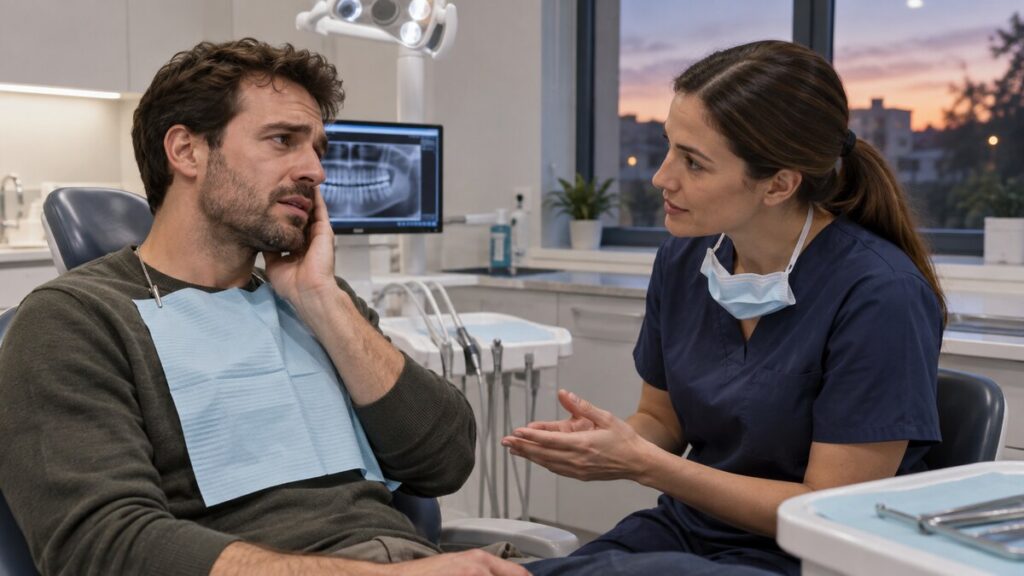
When a tooth suddenly hurts or breaks, it can be difficult to know what to say on the phone. A short, clear description helps a dental team understand your concern and explain the next step. This checklist is for patients contacting Emergency Dental Office in Thornhill; it is not a diagnosis or a promise of immediate treatment.
Explain what happened first
Start with the main change: a tooth broke, a filling came out, a crown became loose, or pain began. Say when it happened and whether there was an injury. If you can identify the area of the mouth, describe it in everyday words rather than trying to name the exact tooth.
Tell the team about pain, bleeding, swelling or any other changes. Describe whether symptoms are constant or come and go and whether they are getting worse. Mention previous dental work on that tooth if you know about it. Let the team ask follow-up questions rather than trying to diagnose the cause yourself.
Do not wait for a blog to decide urgency
The Ontario Dental Association advises contacting a dentist promptly after a dental emergency. Severe or constant mouth pain, or a chipped tooth with pain or bleeding, warrants immediate contact with a dentist. If you have difficulty breathing or swallowing, seek emergency medical help immediately rather than waiting for a dental callback.
Confirm the appointment details
Ask whether the clinic can assess your concern and how soon you should be seen. Confirm the location and appointment time directly with the team. Ask what to do if the clinic cannot see you, or if your symptoms change before you arrive. Online hours and an appointment request are not the same as a confirmed booking.
Explain any access needs, language preferences or practical difficulties that affect your visit. If you need someone to help you travel, make that arrangement after confirming the plan with the clinic.
Bring information that supports the assessment
Bring your medication list, allergy information and any relevant dental records you already have. If a restoration has come out, ask the team whether to bring it. Tell them about any medications you have already taken; ask for specific guidance rather than adding treatments based on online suggestions.
Ask about the assessment and possible next steps
An urgent visit may involve an assessment, imaging and a discussion of treatment options. Ask what the proposed visit involves and whether further treatment or another appointment may be needed. If you have CDCP, ask which rules apply to the proposed services.
Keep a simple record
Write down the appointment details, the instructions you were given and a contact route for follow-up. If you do not understand an instruction, ask the team to explain it before ending the call.
Contact Emergency Dental Office to describe your concern and confirm availability. Learn more about contacting an emergency dentist after hours.
Frequently asked questions
What should I say when calling about a dental emergency?
Describe what happened, when it started, the area involved and whether you have pain, swelling or bleeding. Tell the team if the symptoms are worsening.
Should I wait if a filling falls out but does not hurt?
Contact a dentist promptly for advice. The ODA recommends seeing a dentist as soon as possible for a lost filling; absence of pain does not establish that no care is needed.
How do I confirm an emergency dental appointment near Thornhill?
Contact the team directly with your symptoms and confirm the appointment time, location and availability. A search result or online request is not a confirmed booking; ask what to do if you cannot be seen or symptoms change.
What information should I have ready?
Prepare your medication list, allergies, relevant health history and coverage details. Ask whether you should bring a loose restoration or existing records.
Can the office guarantee a particular treatment before examining me?
No. An assessment is needed to discuss suitable options and any further visits. If you have CDCP, ask how eligibility for the actual proposed services will be checked.
CDCP coverage for this treatment
CDCP includes eligible emergency examinations and treatments such as fillings, root canal treatment and extractions. An urgent concern does not automatically make every proposed service eligible.
Check the official CDCP coverage information and Dental Benefits Guide. Coverage must be confirmed for your proposed treatment; this article does not establish individual eligibility. Reviewed October 5, 2026.
Official patient information and professional guidance
For background, see CDA: Crowns, ODA: Dental Emergencies and Canada.ca: CDCP service coverage. Ontario professional advertising guidance is available from RCDSO. These organisations are independent resources; citing them does not imply endorsement of this clinic or approval of this article.
This article provides general patient information. Diagnosis, treatment choices and care instructions require an individual dental assessment.