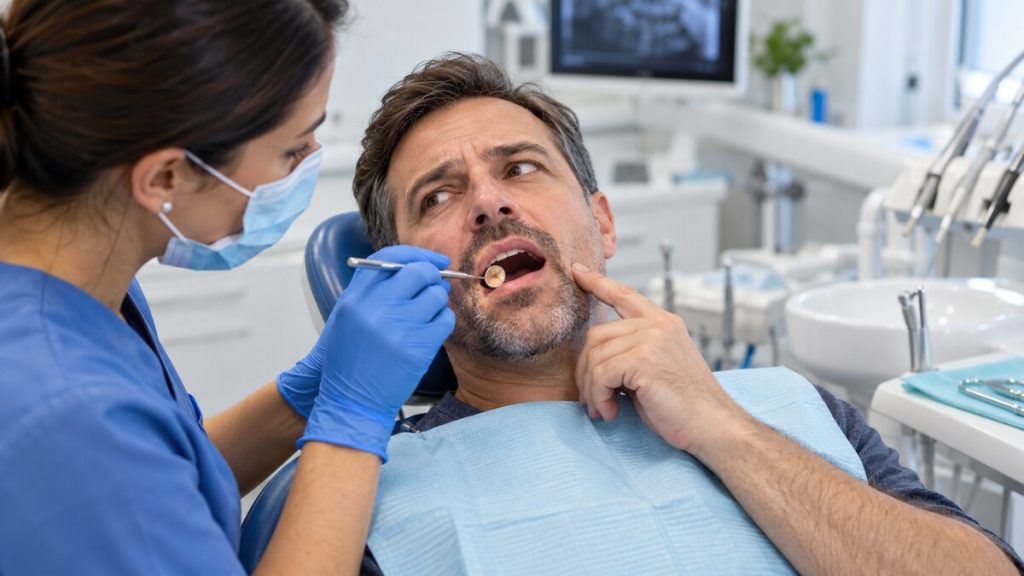
Filling fell out? Protect the tooth, keep the area clean, avoid chewing on that side, and arrange a dental assessment. A lost filling is not always an immediate emergency, but significant pain, swelling, bleeding or additional damage to the tooth can make the situation more urgent.
If a dental filling falls out, protect the tooth and arrange a dental assessment as soon as possible. Keep the area clean, avoid chewing directly on the affected tooth, and do not try to permanently repair it yourself.
A lost filling does not always require immediate emergency treatment. However, pain, swelling, bleeding, increasing sensitivity or a visible fracture can make the situation more urgent.
The goal while you are waiting for dental care is to protect the remaining tooth structure and avoid additional damage.
What Should You Do if a Filling Falls Out?
If a filling falls out, gently rinse your mouth and keep the area as clean as you comfortably can. Avoid repeatedly touching the opening with your tongue or fingers.
The Ontario Dental Association advises people with a lost filling to see a dentist as soon as possible. A small piece of softened sugar-free chewing gum may sometimes be used as a temporary cover over the space until the tooth can be examined.
While waiting for your dental appointment:
- Avoid chewing hard or sticky foods on the affected side.
- Try to keep food from becoming packed into the opening.
- Brush the surrounding teeth gently.
- Avoid very hot or cold foods if they trigger sensitivity.
- Do not try to permanently repair the tooth yourself.
If the tooth becomes increasingly painful, swollen or sensitive, contact a dentist and explain that your symptoms are getting worse.
Is a Lost Filling a Dental Emergency?
Not every lost filling requires immediate emergency treatment.
If the tooth is comfortable and there are no other concerning symptoms, the next appropriate dental appointment may sometimes be suitable. The tooth should still be examined because the missing restoration can leave part of it exposed or vulnerable to further damage.
A more urgent dental assessment may be appropriate when the lost filling is accompanied by:
- Severe or worsening tooth pain
- Increasing sensitivity that is difficult to manage
- Swelling around the tooth, gum, jaw or face
- A visible crack or broken piece of tooth
- Significant pain when biting
- Bleeding associated with dental trauma
- Symptoms that are interfering significantly with eating or sleeping
When you contact the dental office, mention that a filling has fallen out and describe any pain, swelling, bleeding, sensitivity or visible damage. Those details can help the dental team determine how urgently the tooth should be assessed.
Can You Leave a Lost Filling Untreated if It Does Not Hurt?
A tooth can lose a filling without causing significant pain, particularly at first. Lack of pain does not necessarily mean the tooth should be ignored.
The remaining tooth may still be exposed to chewing forces, food debris and temperature changes. It may also be more vulnerable to additional damage depending on how much tooth structure remains.
The Ontario Dental Association recommends seeing a dentist as soon as possible after a filling is lost.
A dental examination can determine whether another filling may be appropriate or whether the tooth needs a different type of treatment.
Can You Eat After a Filling Falls Out?
You can usually continue eating, but it is sensible to protect the affected tooth until it has been examined.
Chew on the opposite side where practical and avoid placing heavy pressure directly on the tooth with the missing filling.
Until you are assessed, consider avoiding:
- Hard foods that require strong biting pressure
- Sticky or chewy foods
- Very hot foods or drinks if the tooth is sensitive
- Very cold foods or drinks if they trigger discomfort
If eating causes significant pain, stop chewing on that side and arrange a dental assessment.
Should You Put the Old Filling Back Into the Tooth?
No. Do not try to force a detached filling back into the tooth.
A dental filling is shaped and placed as part of a controlled restorative procedure. Once it has come loose, the condition of both the tooth and the previous restoration needs to be evaluated.
Do not use superglue, craft glue or another household adhesive inside your mouth.
A temporary protective measure is different from attempting to permanently repair the tooth yourself.
Can You Temporarily Cover a Lost Filling?
Temporary measures can help protect the tooth while you arrange dental care, but they are not a replacement for treatment.
The Ontario Dental Association advises that a softened piece of sugar-free chewing gum may be placed temporarily in the space where a filling has been lost.
Over-the-counter temporary dental repair products may also be available. If you choose to use one, follow the manufacturer’s instructions carefully.
Do not consider a temporary material a permanent repair. The tooth still needs to be examined so the cause of the lost filling and the condition of the remaining tooth can be assessed.
Why Does the Tooth Feel Sensitive After a Filling Falls Out?
Some people notice sensitivity to cold air, drinks, food, pressure or chewing after losing a filling. Others may initially notice very little.
Sensitivity can occur because tooth structure that was previously covered by the restoration is now exposed.
The symptoms alone cannot show exactly how much of the tooth has been affected. Persistent, strong or worsening sensitivity should be assessed by a dentist.
If the problem involves a lost or damaged restoration, you can learn more about dental filling treatment.
Why Would a Dental Filling Fall Out?
There is no single reason that a filling may become loose or fall out.
Possible factors can include:
- Wear over time
- Decay around or underneath the restoration
- Damage to the remaining tooth structure
- A strong biting force
- Grinding or clenching
- Fracture involving the filling or surrounding tooth
Sometimes the restoration itself fails. In other situations, part of the underlying tooth may have changed or become damaged.
This is why simply replacing the missing material without examining the tooth may not address the underlying problem.
What if Part of the Tooth Broke Off With the Filling?
If you can see that a piece of the natural tooth broke away along with the filling, arrange an assessment promptly.
The appropriate treatment depends on how much tooth structure remains, where the fracture extends and whether deeper parts of the tooth have been affected.
Do not assume the tooth needs to be extracted before it has been examined. Different restorative options may be possible depending on the condition of the tooth.
If the tooth itself appears fractured, see our guide to broken tooth emergencies and repair options.
Could a Lost Filling Lead to Root Canal Treatment?
Not automatically.
A lost filling by itself does not mean that root canal therapy is necessary.
However, deeper decay, a significant crack or inflammation or infection involving the pulp may change the treatment plan.
The dentist needs to examine the tooth and may recommend dental imaging when clinically appropriate before determining what treatment is needed.
If the pulp is significantly affected and the tooth can still be restored, root canal therapy may be one possible treatment option.
What Will the Dentist Check?
The dentist will examine the tooth, the area where the filling was lost and the surrounding tissues.
Dental imaging may be recommended when clinically useful for evaluating the remaining tooth structure, decay, a possible fracture or deeper involvement.
The next step may depend on factors such as:
- How much healthy tooth structure remains
- Whether the tooth has cracked or fractured
- Whether decay is present
- The size and location of the previous filling
- Whether deeper tissues inside the tooth appear to be affected
In some cases, another filling may be appropriate. In other situations, a different restorative treatment may need to be considered.
The appropriate treatment cannot be determined from the missing filling alone.
When Should You Seek Urgent Dental Care for a Lost Filling?
A prompt assessment becomes more important when symptoms suggest that the problem involves more than the restoration itself.
Seek urgent dental care when you have:
- Severe or rapidly worsening pain
- Increasing gum, jaw or facial swelling
- Significant pain when biting
- A visible fracture or loose piece of tooth
- Trauma to the tooth or face
- Bleeding associated with the damaged tooth
- Symptoms that are becoming progressively worse
If the filling falls out outside regular dental hours, our guide to after-hours dental emergencies explains how different symptoms may affect the urgency of dental care.
When Is It a Medical Emergency?
A missing filling itself is primarily a dental problem. However, symptoms involving the airway, extensive swelling or major trauma may require emergency medical care rather than waiting for a dental appointment.
Seek emergency medical attention if you develop symptoms such as:
- Difficulty breathing
- Difficulty swallowing
- Rapidly increasing or extensive swelling of the mouth, face or neck
- Serious facial or jaw trauma
- Bleeding that cannot be controlled
These symptoms should not be managed by waiting for a routine dental visit.
Frequently Asked Questions About Lost Fillings
How long can I wait after a filling falls out?
There is no single waiting period that is appropriate for every tooth. The Ontario Dental Association recommends seeing a dentist as soon as possible after losing a filling. Pain, swelling, fracture or worsening symptoms can increase the urgency.
Can I brush a tooth after the filling falls out?
Continue normal oral hygiene, but clean carefully around the affected tooth. Avoid aggressively probing the opening with your toothbrush, fingers or other objects.
What if my filling fell out but the tooth does not hurt?
Arrange a dental assessment anyway. Absence of pain does not confirm that the remaining tooth is undamaged or that treatment is unnecessary.
Can I temporarily cover a lost filling?
The Ontario Dental Association advises that softened sugar-free chewing gum may be used temporarily to cover the space left by a lost filling until you can see a dentist.
Can I eat after a filling falls out?
You can usually eat, but avoid chewing directly on the affected tooth. Hard, sticky and very hot or cold foods may cause additional discomfort or place more stress on the remaining tooth.
Can a lost filling cause an infection?
A missing filling can leave damaged or decayed tooth structure exposed and allow an underlying dental problem to progress. Whether infection is present requires a dental assessment.
Should I go to the hospital because a filling fell out?
A lost filling alone usually requires dental rather than hospital treatment. Emergency medical care may be appropriate if you have difficulty breathing or swallowing, extensive swelling, uncontrolled bleeding or significant facial trauma.
Sources Reviewed
- Ontario Dental Association — Dental Emergencies
- City of Toronto — Tooth Troubles
- NHS — Dental Abscess Guidance
Did Your Filling Fall Out?
If the tooth is painful, sensitive, fractured or becoming more uncomfortable, a dental assessment can help determine what happened and which treatment options may be appropriate.
Contact Emergency Dental Office to request a dental assessment.