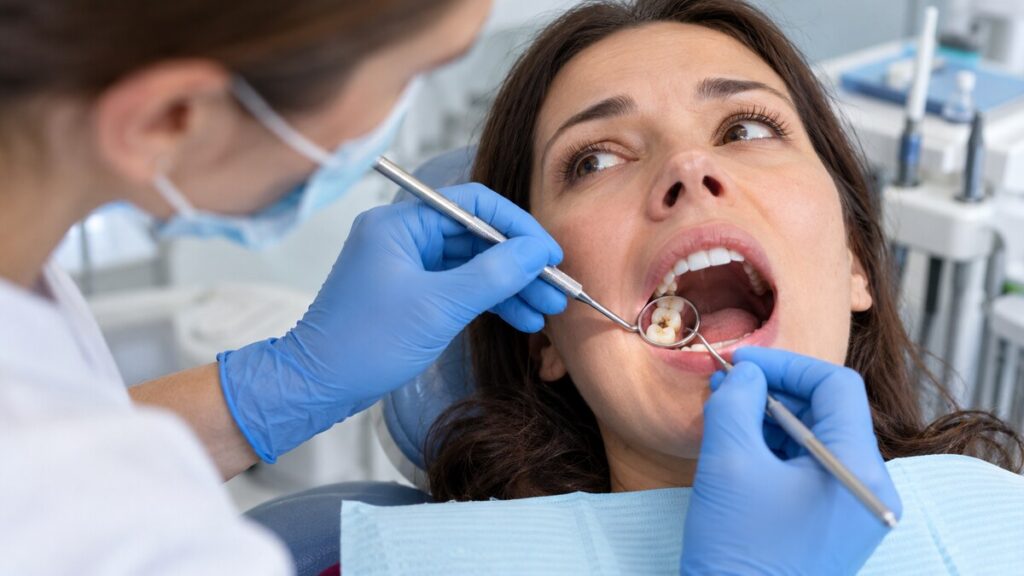
Tooth damage can range from a small chip to a serious fracture. Some damaged teeth cause immediate pain, while others may look minor at first. If you notice a crack, broken tooth, swelling, persistent sensitivity or pain when biting, a dental assessment can determine how serious the damage is and whether urgent treatment is needed.
A broken tooth is one kind of tooth damage — this guide covers the full range, from chips and cracks to fractures and worn teeth, and how each one is repaired.
A damaged tooth should be assessed by a dentist, particularly if it is painful, cracked, broken or becoming more sensitive. Tooth damage can happen suddenly after an accident or develop gradually because of decay, grinding, wear or an older restoration that has weakened.
Not every chipped or damaged tooth is an immediate dental emergency. However, severe pain, swelling, bleeding, trauma or a large fracture can make the situation more urgent.
Until the tooth can be examined, the goal is to keep it clean, avoid chewing on the affected side and prevent further damage.
Is Tooth Damage a Dental Emergency?
Not every damaged tooth requires immediate emergency treatment. A small chip without pain may be less urgent, while a large fracture or painful crack may need prompt dental care.
Contact a dentist as soon as possible if the damaged tooth is accompanied by:
- Severe or increasing tooth pain
- A visible crack or broken section of tooth
- Swelling around the tooth, gum, jaw or face
- Bleeding that does not stop
- Pain when biting or chewing
- Strong or lingering sensitivity to hot or cold
- A loose adult tooth
- Damage caused by a fall, sports injury or other trauma
If facial swelling affects your ability to breathe or swallow, bleeding cannot be controlled, or you have experienced significant facial or jaw trauma, seek emergency medical care rather than waiting for a routine dental appointment.
What Does Tooth Damage Look Like?
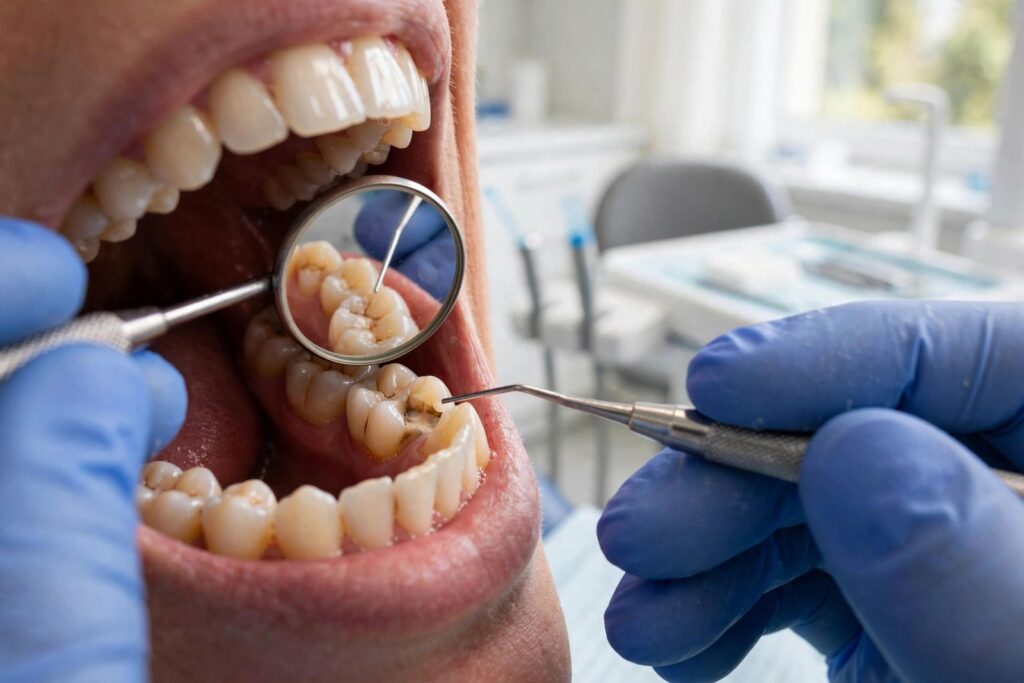
Tooth damage is not always easy to identify. Some problems are clearly visible, while others may cause symptoms even though the tooth appears relatively normal.
Common signs of damaged teeth include:
- A chipped or uneven edge
- A rough or sharp tooth surface
- A visible crack line
- A piece of tooth that has broken away
- A dark area associated with decay
- Pain when chewing or releasing pressure
- New sensitivity to hot, cold or sweet foods
- Swelling around the tooth
- A tooth that feels weaker or looser than usual
The term “damaged tooth” can describe several different problems, including chips, cracks, fractures, cavities, enamel wear and damage around an existing filling or crown. A dental examination is needed to determine the exact problem.
Common Types of Tooth Damage
Chipped Tooth
A chipped tooth occurs when a small portion of enamel breaks away. Minor chips may cause little or no discomfort, but a larger chip can expose deeper tooth structure and cause sensitivity.
A chipped edge may also feel sharp against the tongue or cheek.
Cracked Tooth
A cracked tooth may have a visible line or may appear normal from the outside. Some cracks cause pain when biting down, particularly when pressure is released.
Because cracks can extend deeper into the tooth, they should be assessed before they become larger or affect the inner tissues of the tooth.
Broken Tooth
A broken tooth usually involves more structural damage than a small chip. A significant portion of the tooth may be missing, and deeper layers may become exposed.
If part of your natural tooth has fractured, see our guide to broken tooth emergencies and repair options.
Tooth Damage Caused by Decay
Not all damaged teeth result from an accident. Tooth decay can gradually weaken the enamel and underlying structure until part of the tooth breaks.
A tooth damaged by decay may also become increasingly sensitive or painful over time.
Worn or Eroded Teeth
Grinding, clenching, acidic foods and drinks, and long-term wear can gradually change the shape and strength of teeth.
This type of damage may lead to thinner enamel, sensitivity, flattened biting surfaces or small fractures.
Damage Around a Filling or Crown
Existing dental restorations can also become damaged or loose. A filling may fracture or fall out, while a crown can loosen or come off completely.
If this happens, the underlying tooth needs to be checked before the restoration is repaired or replaced.
For related guidance, see what to do if you lose a filling or crown.
What Causes Tooth Damage?
There is no single cause of damaged teeth. Some damage happens suddenly, while other problems develop gradually.
Common causes include:
- Biting hard foods such as ice, hard candy or popcorn kernels
- Falls, sports injuries or accidents
- Untreated cavities
- Teeth grinding or clenching
- Large or older dental fillings that have weakened
- Repeated pressure on a weakened tooth
- Using teeth to open packages or bite non-food objects
- Long-term enamel wear or erosion
In some cases, a tooth may already be weakened by a small crack or decay before a larger piece eventually breaks away.
What Should You Do Right Away if You Damage a Tooth?
If you think you have chipped, cracked or broken a tooth, a few simple steps can help protect it until you can see a dentist.
- Rinse your mouth gently with warm water. This can help remove food particles and debris.
- Save any broken piece of tooth if you can find it. Keep it in a clean container and bring it to your dental appointment.
- Apply a cold compress outside the mouth if there is swelling.
- Avoid chewing on the damaged side.
- Choose softer foods until the tooth has been examined.
- Cover a sharp edge temporarily if necessary. Dental wax or sugar-free chewing gum may help protect your tongue or cheek until you receive care.
What Should You Avoid Doing?
A damaged tooth can sometimes become worse when people attempt to fix the problem themselves.
Avoid:
- Ignoring the tooth because the pain comes and goes
- Trying to glue broken tooth structure back into place
- Chewing hard foods on the damaged side
- Placing aspirin directly against the tooth or gum
- Assuming that a small crack cannot become larger
A tooth does not need to cause severe pain to require treatment. Some cracks and fractures remain relatively painless until the damage progresses.
How Can a Dentist Repair a Damaged Tooth?
Treatment depends on the location and severity of the damage, the amount of healthy tooth structure remaining and whether the inner pulp of the tooth has been affected.
Dental Filling or Bonding
Minor damage may sometimes be repaired with a tooth-coloured filling or bonding material.
This can be appropriate for certain small chips, cavities or areas where limited tooth structure has been lost.
You can learn more about dental filling treatment.
Dental Crown
If a larger part of the tooth is weakened or missing, a dental crown may be considered to restore the shape, function and protection of the remaining tooth.
For more information, see our dental crown service.
Root Canal Therapy
If damage, decay or a fracture has significantly affected the pulp inside the tooth, root canal therapy may be required before the tooth can be restored.
Whether this treatment is necessary depends on the findings from the dental examination and any imaging considered clinically appropriate.
Learn more about root canal therapy.
Tooth Extraction
Some severely damaged teeth cannot be predictably restored. If too little healthy tooth structure remains, or if the fracture extends too deeply, extraction may need to be considered.
A dentist should examine the tooth before determining whether it can be repaired or needs to be removed.
See our information about tooth extraction.
Can a Damaged Tooth Heal on Its Own?
A damaged tooth does not heal in the same way as skin or other soft tissues.
Enamel that has chipped or fractured does not grow back. Symptoms may temporarily improve, but that does not necessarily mean the underlying problem has resolved.
A crack may continue to extend, bacteria can enter exposed areas, and chewing forces may place additional pressure on weakened tooth structure.
Early assessment may allow the dentist to identify the problem while more of the natural tooth can still be preserved.
When Is a Damaged Tooth More Urgent?
Some symptoms suggest that the damage may involve deeper tooth structures or an infection.
Seek prompt dental care when you have:
- Severe or throbbing pain
- Swelling in the gum, jaw or face
- Bleeding that continues
- Pus or an unpleasant taste associated with the tooth
- Fever or other signs of infection
- Difficulty biting or closing your mouth normally
- A loose tooth after trauma
- A large section of tooth that has broken away
If tooth pain is one of your main symptoms, you can also review our emergency toothache guidance.
When Might Tooth Damage Be Less Urgent?
A very small chip without pain, swelling or significant sensitivity may not require immediate same-day treatment.
However, even minor damage should still be assessed because:
- The tooth may be weaker than it appears
- A rough edge may become larger
- Your bite may place additional pressure on the tooth
- A hidden crack or decay may be present
If symptoms begin to develop or worsen, arrange care sooner.
When Should You See an Emergency Dentist in Thornhill or Toronto?
If you have damaged a tooth and are unsure how serious the problem is, a dental examination can determine whether you need a filling, crown, root canal treatment, extraction or another form of care.
Emergency Dental Office provides dental care for patients in Thornhill, Toronto and nearby communities. If your damaged tooth is painful, fractured, swollen or becoming increasingly sensitive, a prompt assessment can help determine the appropriate next step.
You can learn more about emergency dental care in Thornhill and Toronto.
Frequently Asked Questions About Tooth Damage
Is a small chipped tooth always a dental emergency?
No. A small chip without significant pain, swelling or sensitivity may not require immediate emergency treatment. However, the tooth should still be examined to determine whether deeper damage is present.
Can a damaged tooth become infected?
Yes. If damage or decay allows bacteria to reach deeper areas of the tooth, inflammation or infection can develop. Whether infection is present requires a dental assessment.
Can I eat with a damaged tooth?
You can usually eat, but avoid chewing directly on the damaged tooth. Softer foods are generally safer while you are waiting for an examination. Avoid very hard, crunchy, sticky, hot or cold foods if they trigger discomfort.
Can a cracked tooth be repaired?
Some cracked teeth can be restored, but treatment depends on the depth and location of the crack and how much healthy tooth structure remains. A dental examination is needed to determine whether a filling, crown, root canal treatment or another option is appropriate.
Will a chipped tooth grow back?
No. Tooth enamel does not regenerate after part of it has chipped away. A dentist can determine whether the damaged area needs smoothing, bonding, a filling or another restoration.
Should I go to the hospital for a damaged tooth?
A dentist is usually the appropriate first point of care for a chipped, cracked or broken tooth. However, severe facial swelling, uncontrolled bleeding, difficulty breathing or swallowing, or significant facial or jaw trauma requires urgent medical attention.
Damaged or Broken Tooth?
If your tooth is painful, cracked, chipped, fractured or becoming more sensitive, a dental assessment can determine how serious the damage is and which treatment options may be appropriate.
Contact Emergency Dental Office to request a dental assessment.
If you have a damaged tooth, call Emergency Dental Office at (905) 764-5399 to book an assessment. The dentist will confirm the treatment and cost after examining the tooth.