If you’re considering new dentures, whether for replacing a few teeth or an entire set, you’re probably wondering if they’re the right choice for you. The short answer? Dentures are one of the most reliable and customizable solutions for replacing missing teeth, offering functionality and a natural appearance. They restore your ability to eat, speak, and smile confidently. Here we break it down for you to understand this procedure:
| Type of Dentures | Advantages | Best Suited For |
| Complete Dentures | – Restores all teeth in one or both arches- Natural appearance- Affordable compared to implants | Individuals missing all teeth in the upper, lower, or both arches |
| Partial Dentures | – Replaces multiple missing teeth- Prevents shifting of remaining teeth- Removable and easy to clean | People with some natural teeth remaining |
| Implant-Supported Dentures | – Stable and secure- Feels more natural- Long-lasting solution | Those with sufficient jawbone density looking for a durable, fixed option |
| Flexible Dentures | – Comfortable and lightweight- No metal clasps- Aesthetic and natural-looking | Patients with sensitivity to rigid materials or seeking a more discreet appearance |
| Immediate Dentures | – Provides teeth immediately after extraction- Avoids being toothless during healing | Individuals needing immediate tooth replacement after extractions |
In this post, we’ll cover everything you need to know about dentures, including their types, the fitting process, benefits, and much more.
What Are Dentures?
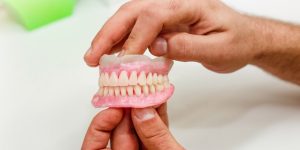
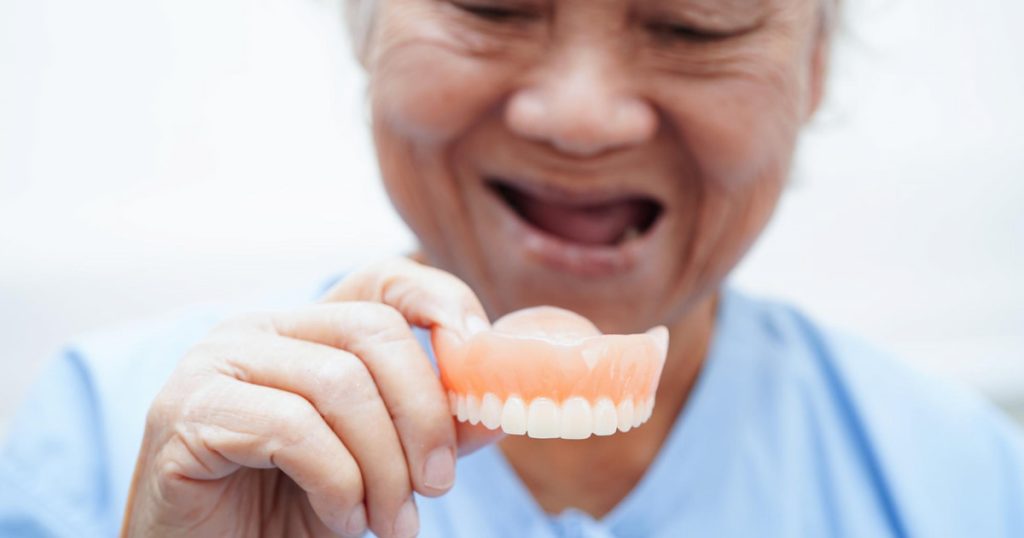
According to Healthline, dentures are removable dental appliances that are designed to replace missing teeth, and that is why they’re also known as fake teeth. They are custom-made to fit your mouth and are typically made from acrylic, porcelain, or a combination of both materials. Whether you’re missing a few teeth or need a full set, dentures can help restore your smile, functionality, and overall oral health.
Types of Dentures: Full vs. Partial
There are two primary types of dentures: full dentures and partial dentures. Full dentures are used when all of the teeth in a particular area are missing, typically on either the upper or lower jaw. These dentures cover the entire arch of teeth, providing both aesthetic and functional benefits. Partial dentures, on the other hand, are used when only some teeth are missing. They are designed to fill the gaps and attach to the remaining natural teeth, offering a more subtle solution.

Materials Used in Dentures
Dentures can be made from various materials, with acrylic being the most common. Acrylic dentures are lightweight and natural-looking, while porcelain dentures are known for their durability and aesthetic quality. Some dentures may use a combination of acrylic and porcelain, providing both strength and comfort. The choice of material largely depends on your specific needs, budget, and the recommendation of your dentist.
How Dentures Work for Tooth Replacement
Dentures function as artificial teeth, replacing missing teeth to restore both appearance and function. They help with chewing, speaking, and maintaining the shape of your face. Dentures work by sitting snugly on the gums and are held in place by natural suction or dental adhesive. The precision of the fit is crucial for comfort and effective performance, which is why the customization process is so important.
The Denture Fitting Process
Getting new dentures is a personalized process that begins with an initial consultation and continues through a series of steps to ensure the best fit. Here’s a breakdown of the fitting process:

1. Initial Consultation and Evaluation
The first step in getting dentures is meeting with your dentist for an initial consultation. During this visit, your dentist will evaluate the condition of your mouth, gums, and remaining teeth. They’ll take X-rays and impressions to determine the best plan for your denture needs.
In our experience, many patients come in feeling unsure about what to expect, but leave feeling confident after understanding the process. One patient was particularly relieved when we explained how the impressions would help create dentures that fit perfectly and look natural. It’s all about providing clarity and comfort from the very beginning.
2. Taking Impressions and Customization
Once your dentist has assessed your oral health, they’ll take precise impressions of your mouth to create customized dentures. These impressions are sent to a lab where your new dentures will be crafted. Your dentist will ensure that your dentures match the size, shape, and color of your natural teeth for a seamless look.
3. Fitting and Adjustments
Once your dentures are ready, your dentist will fit them in your mouth, ensuring they sit comfortably and securely. There may be several adjustments during this stage to ensure the dentures don’t cause irritation or discomfort. You’ll likely need to return for follow-up appointments to fine-tune the fit and make sure your new dentures work perfectly.
We Can Give Your Beautiful Smile Back!
Ready to explore your options for dentures or need expert guidance on your smile restoration journey? Contact Emergency Dental Office today for personalized care and top-quality solutions.
How to Care for Your Dentures
Proper care and maintenance are essential for keeping your dentures in good condition and ensuring they last. Here’s what you need to know about caring for your dentures.
A: Cleaning and Maintenance Tips
To keep your dentures clean and hygienic, it’s essential to brush them daily with a soft-bristle toothbrush and denture cleaner. This will help remove plaque, food particles, and bacteria that can accumulate on the surface. Additionally, you should soak your dentures overnight in a denture cleaning solution to keep them fresh and prevent them from drying out.
B: How to Prevent Common Denture Problems
Common issues with dentures include discomfort, slippage, or difficulty speaking and eating. To prevent these problems, make sure your dentures fit properly and avoid eating sticky or hard foods. Regular dental check-ups are also important to address any changes in the fit or comfort of your dentures over time.
C: When to Replace or Adjust Your Dentures
Dentures typically need to be replaced or adjusted every 5-10 years, depending on wear and changes in your mouth. As your gums and bone structure shift over time, your dentures may need to be realigned or replaced to maintain comfort and functionality.

What Are the Benefits of Dentures?
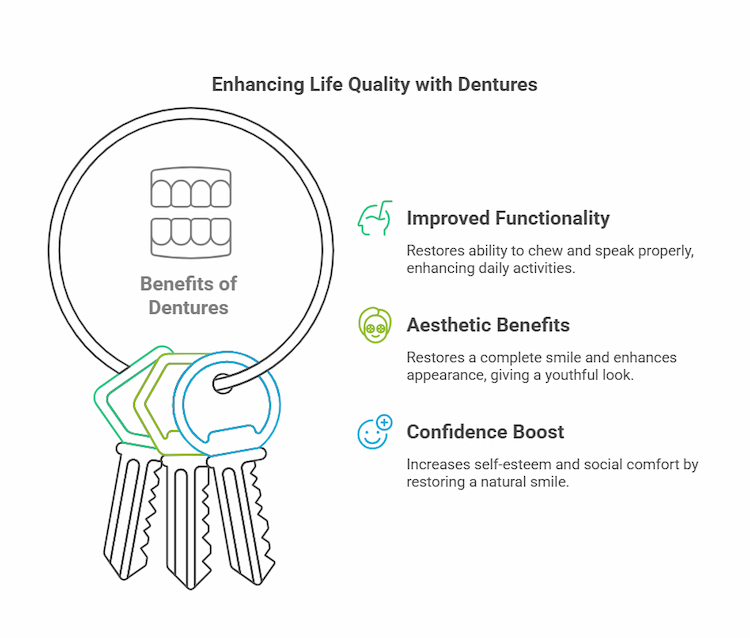
Dentures can significantly improve your quality of life, offering various physical, emotional, and aesthetic benefits. Here are some of the key advantages:
- Improved Functionality and Comfort
Dentures can restore your ability to chew and speak properly, making everyday activities much easier. They also help maintain the shape of your face, which can be altered when teeth are missing.
- Aesthetic Benefits: Restoring Your Smile
One of the most immediate benefits of dentures is the improvement in your appearance. Full dentures can restore a complete smile, while partial dentures can fill in gaps and enhance your overall look. Dentures help you regain a natural, youthful appearance.
- Confidence Boost and Emotional Impact
Missing teeth can cause a lot of self-consciousness, but dentures can boost your confidence by restoring your smile. Many people feel more comfortable socializing, smiling, and speaking freely once they have their dentures in place.
Costs and Insurance for Dentures
The cost of dentures usually falls between $1,600 to $3,000, but the exact price depends on several factors.
- The type of dentures you choose, whether full, partial, or implant-supported, plays a big role in the cost.
- Materials also make a difference, with higher-quality options like porcelain costing more than basic acrylic.
- Customization, such as how natural they look and fit, can add to the price, too.
- Plus, if you need extra procedures like tooth extractions or bone grafting, those will increase the overall cost.
- Finally, location matters; dental care in big cities tends to be more expensive than in smaller towns.
At Emergency Dental Office, we offer top-quality dentures tailored to your needs. Our professional dentists are here to help you choose the right type and get dentures to enhance your smile appearance and dental health. So, why not contact us now?!
FAQs About Dentures
-
What are the different types of dentures available?
There are full dentures, which replace an entire arch of teeth, and partial dentures, which fill in gaps left by missing teeth. Custom dentures are also an option, offering a tailored fit for maximum comfort and function.
-
How do I know if I need dentures or implants?
Dentures are ideal if multiple teeth are missing or if your gums aren’t healthy enough for implants. Implants, however, are a more permanent option and might be recommended if you have strong jawbone support.
-
How long does it take to get used to wearing dentures?
It typically takes a few weeks to adjust to new dentures. During this time, you may experience slight discomfort or difficulty speaking and eating, but this improves as you adapt.
-
What’s the best way to clean and care for my dentures?
Clean your dentures daily with a soft-bristle brush and denture cleaner. Soak them overnight in a cleaning solution to keep them fresh and free of bacteria.
-
Are there any foods I should avoid with dentures?
Yes, you should avoid sticky, hard, or crunchy foods that can damage your dentures or cause discomfort. Gradually reintroduce solid foods once you’re comfortable eating with dentures.