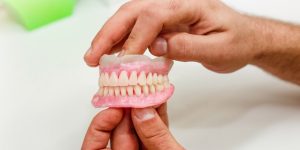
Can you have all your teeth pulled and get dentures? It is possible to have all remaining natural teeth extracted and replace them with complete dentures, but removing every natural tooth is not automatically the best option for every patient. A dentist should first assess which teeth, if any, can reasonably be preserved and compare the available replacement options.
Full-mouth extraction may be considered when multiple teeth have a poor prognosis because of extensive decay, advanced periodontal disease, severe damage, or other clinical factors. Depending on the treatment plan, dentures may be prepared in advance and placed soon after the extractions, or they may be made after the tissues have had time to heal.
You can also listen to our podcast about considerations involved in full-mouth extraction and dentures.
Can You Have All Your Teeth Removed and Get Dentures?
Yes. Complete dentures can replace all of the natural teeth in the upper jaw, lower jaw, or both. However, the decision to remove remaining teeth requires an individual dental assessment because preserving suitable natural teeth may sometimes offer advantages.
Your dentist may examine the condition of the teeth and gums, bone support, existing infections, your medical history, and your goals before recommending extraction or discussing alternatives.
Potential Benefits and Considerations of Full-Mouth Extraction and Dentures
For someone whose remaining teeth cannot predictably be restored, complete dentures may provide a removable way to replace missing teeth. However, both the extraction process and adapting to dentures involve important considerations.
| Potential Benefit | Important Consideration |
| Complete dentures replace missing teeth and can help with appearance, speech and chewing compared with having no teeth. | Eating and speaking with new dentures can feel different at first and usually requires an adjustment period. |
| They are removable and can replace an entire upper or lower arch. | Fit can change as the gums and underlying bone change after extractions. |
| Immediate dentures may allow a patient to have replacement teeth during the healing period. | Immediate dentures commonly require follow-up adjustments, relining or eventual replacement as healing progresses. |
| Dentures can be customized for the patient’s mouth and appearance. | Some patients experience temporary soreness, irritation, looseness or difficulty adapting and may require follow-up visits. |
New dentures may initially feel unfamiliar. Follow-up appointments are important so the dentist can evaluate comfort, function and fit and make adjustments when appropriate.
Long-Term Oral Health With Complete Dentures
Complete dentures still require daily care. Clean them according to the instructions provided by your dentist and continue caring for your gums, tongue and other oral tissues. Denture fit should also be reviewed over time because the shape of the mouth can change.
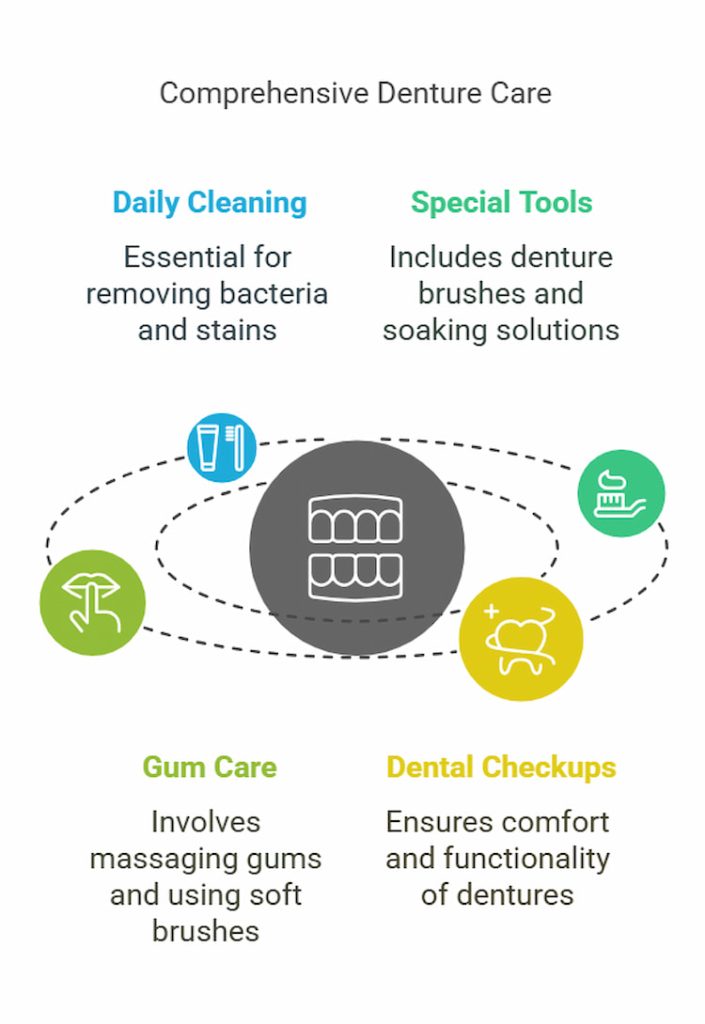
If a denture causes persistent soreness, instability, difficulty eating, or other problems, arrange a dental assessment rather than attempting to alter the denture yourself.
Who May Be Considered for Full-Mouth Extraction and Dentures?
Full-mouth extraction may be considered when many or all remaining teeth have a poor prognosis and cannot reasonably be preserved. Situations can include extensive tooth decay, advanced periodontal disease, multiple severely broken teeth, or other complex dental problems.
The decision should be based on a clinical examination and, when appropriate, dental imaging. A dentist can then discuss whether some natural teeth can be restored or retained and whether complete dentures, partial dentures, overdentures, implants, bridges, or another treatment approach may be suitable.

Removing multiple teeth is a surgical dental procedure. The type of anesthesia, comfort measures and whether referral is appropriate depend on the number and position of the teeth, the complexity of the extractions, the patient’s medical history and the treatment setting. Learn more about our tooth extraction services.
Alternatives to Removing All Natural Teeth
Before removing all remaining teeth, a dentist should consider whether any teeth can reasonably be preserved. Depending on the condition of the mouth, alternatives may include:
- Restorative treatment for teeth that can still be predictably repaired
- Periodontal treatment when suitable teeth have adequate long-term potential
- Partial dentures when useful natural teeth remain
- Overdentures supported by selected remaining teeth or dental implants
- Dental implants or implant-supported prosthetic options where clinically appropriate
- Fixed bridges in suitable situations
The appropriate option depends on oral health, bone and gum condition, medical history, treatment goals, cost considerations and the prognosis of the remaining teeth.
Immediate Dentures vs. Conventional Dentures
If all remaining teeth are being removed, one important decision is whether replacement teeth will be provided with immediate dentures or after healing with conventional dentures.
| Immediate Dentures | Conventional Dentures |
| Made before the planned extractions. | Made after the teeth have been removed and the tissues have healed sufficiently for the planned treatment. |
| Can be inserted at or around the time the remaining teeth are removed, depending on the treatment plan. | The patient goes through a healing period before the final denture is made and inserted. |
| The fit changes as gums and bone remodel after extraction, so adjustments, relining or replacement may be necessary. | The denture is made using the shape of the mouth after healing has progressed, which can improve the predictability of the initial fit. |
Your dentist can explain which approach is appropriate for your circumstances. Immediate dentures are not automatically suitable for every patient.
Considering Extractions and Dentures?
If several teeth are damaged or you have been told that multiple extractions may be necessary, contact Emergency Dental Office for an assessment. We can review the condition of your teeth, discuss whether any can be preserved and explain appropriate replacement options.
What Happens After All Your Teeth Are Extracted?
Healing after multiple extractions occurs gradually. The gums and underlying bone continue changing after the teeth are removed, which is one reason denture fit can change during the healing period.
If immediate dentures are used, your dentist may schedule follow-up visits to assess the extraction sites and make adjustments as the mouth heals. Relining or replacement may eventually be recommended because the denture was made using the shape of the mouth before the extractions.
Follow the post-extraction and denture-care instructions provided by your dental team. Contact the dentist if you develop worsening pain, increasing swelling, persistent bleeding, drainage, fever, or another symptom that concerns you.
Cost and Insurance for Full-Mouth Extractions and Dentures
There is no single price that applies to every full-mouth extraction and denture treatment plan. Cost depends on factors such as the number and complexity of the extractions, whether surgical treatment is required, the type of denture, laboratory requirements, imaging, follow-up adjustments and any additional procedures.
Insurance and public dental program coverage also varies according to the patient’s plan, eligibility, procedure and applicable limits. Before treatment, ask the dental office for a personalized estimate and confirm what portion, if any, may be covered.
You can learn more about our full and partial denture services in Thornhill near North York.
Before deciding to remove all remaining natural teeth, arrange a dental assessment to understand which teeth can be preserved, what replacement options are available and what the treatment would involve in your individual case.
FAQs
-
Can you get all your teeth pulled and get dentures?
Yes. Complete dentures can replace all of the natural teeth after they are removed. However, a dentist should first assess whether any remaining teeth can reasonably be preserved and discuss the available replacement options with you.
-
Can I get dentures immediately after having all my teeth extracted?
Immediate dentures can be made before planned extractions and placed at or around the time the teeth are removed, depending on the treatment plan. Because the gums and bone change during healing, immediate dentures often require adjustments, relining or eventual replacement.
-
How long does it take to heal after having all your teeth extracted?
Healing varies by patient and continues in stages. The extraction sites and soft tissues heal while the underlying bone continues to remodel for a longer period. Your dentist can explain what to expect based on the number and complexity of the extractions and the denture plan.
-
Should I remove all my natural teeth if I need dentures?
Not necessarily. If some natural teeth can be predictably preserved, options such as partial dentures or overdentures may be considered. The decision should be based on a dental examination, the prognosis of each tooth, your overall oral health and your treatment goals.
-
What is the difference between immediate and conventional dentures?
Immediate dentures are prepared before extractions and can be inserted around the time the remaining teeth are removed. Conventional dentures are made after the teeth have been removed and the mouth has had time to heal. Each approach has different advantages and follow-up requirements.