Crown vs implant in Thornhill is really two different questions wearing one label. A crown saves a tooth that is still there but weakened. An implant replaces a tooth that is gone — or one that cannot be saved. Comparing them starts with an honest verdict on the tooth itself, and this guide explains how that verdict is reached, including when each option does not suit.
If the tooth cannot be saved, the replacement path is described on our page for dental implants in Thornhill at Emergency Dental Office. If you are in pain right now, call (905) 764-5399 first and read afterwards.
On this page
The short answer
Keep a tooth that can be predictably repaired — a crown over a sound foundation is usually the simpler, faster path. Replace a tooth that is fractured below the gum, decayed beyond repair, or failing after previous treatment — an implant stands on its own and does not depend on a compromised tooth. The grey zone is a tooth that could be saved with root canal treatment plus a crown but with a guarded outlook; that is where the evidence below helps.
Crown vs implant, side by side
| Dental crown (on your own tooth, often after root canal treatment) | Dental implant | |
|---|---|---|
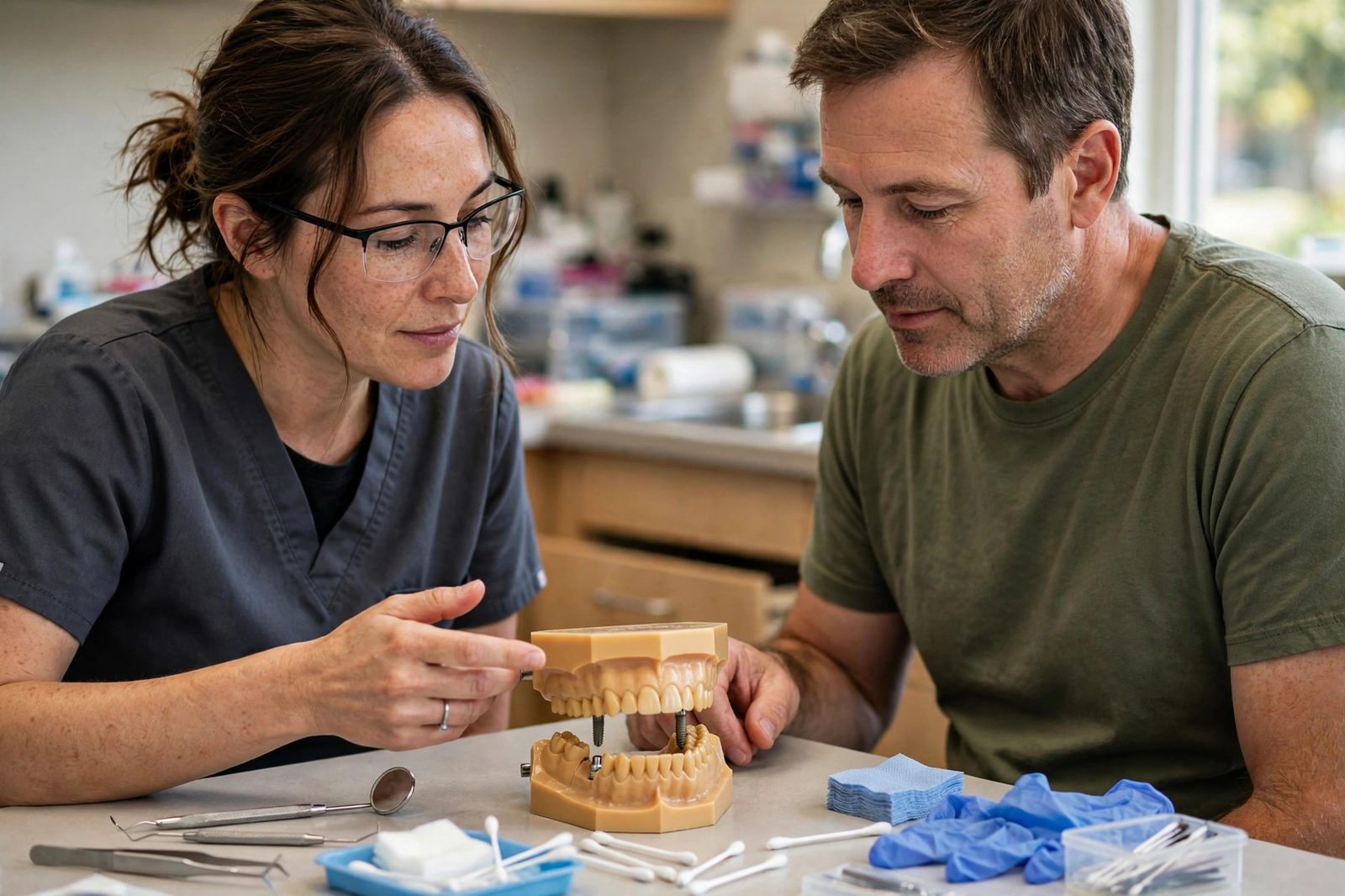
| What it is / how it works | A cap that covers and protects a prepared natural tooth. If the nerve is infected or dead, root canal treatment cleans the inside of the tooth first, then the crown seals and strengthens it. | A titanium post placed in the jawbone where the root used to be; after the bone bonds to it, an abutment and crown are attached. The tooth is replaced, not repaired. |
| Typical lifespan | Salehrabi & Rotstein (2004) reported roughly 97% of root-canal-treated teeth still present at 8 years (retention of the treated tooth); Torabinejad and colleagues (2007) found survival of root-treated teeth and single implants broadly comparable at 4–6 years, with implants showing higher reported success rates on stricter criteria. A crown’s own life depends on the remaining tooth structure and bite. | Jung and colleagues (2012), in a systematic review, reported 5-year survival of about 97% and 10-year survival of about 95% for single-tooth implants (survival = the implant still in place). Pjetursson and colleagues report similar 10-year figures for implant-supported single crowns. These are population figures, not promises for an individual. |
| Maintenance and care | Brush and floss normally; the crown margin needs cleaning because the natural tooth underneath can still decay. Night grinding may call for a guard. | Cleaned like a natural tooth, with attention to the gumline around the implant; implants cannot decay, but the surrounding gum and bone can become inflamed if hygiene slips. |
| Effect on neighbouring teeth and jawbone | Keeps your own root in the bone, which helps maintain bone around that tooth; neighbouring teeth are untouched. | Stands independently and loads the bone where the root was lost, helping limit bone shrinkage in that spot; neighbouring teeth are untouched. |
| Who it suits and who it does not | Suits a tooth with enough sound structure, a treatable root system, and healthy supporting bone. May not suit a tooth cracked below the gumline, with too little remaining structure, or with advanced gum disease around it. | Suits patients missing a tooth, or with a tooth that cannot be saved, who have adequate bone (or bone that can be rebuilt) and health that allows a minor surgical procedure. May not suit uncontrolled medical conditions or cases where surgery must be avoided. |
| Number of visits and timeline | Root canal treatment (one to two visits where needed) plus crown preparation and fitting — usually completed within a few weeks. | Several visits over a few months: placement, a healing period while the bone bonds to the post, then the final crown. |
| CDCP coverage | Crowns can be covered for eligible CDCP patients in defined situations, subject to plan rules and preauthorization — eligibility always comes first. | Dental implants are not covered by the Canadian Dental Care Plan. Federal details: Canada.ca — Canadian Dental Care Plan. |
How to choose
Ask three questions in order. First: can this tooth be predictably saved — enough structure, treatable roots, healthy support? Second: what does each path ask of you — weeks and no surgery, or months with a surgical step? Third: what is the fallback if the first choice fails? Factors that affect cost include root canal treatment, posts or build-ups, grafting, and the number of visits, so an exact figure follows an examination with imaging. Call Emergency Dental Office in Thornhill at (905) 764-5399 for an assessment — and call the same number promptly if the tooth is causing pain, swelling or has broken, so the urgent problem is handled first.
Common questions
Is it always better to save my own tooth?
When a tooth can be predictably repaired, saving it is usually the simpler path. When the prognosis is poor — a deep fracture or extensive decay — investing in saving it can mean paying twice. The assessment exists to tell these apart.
Does a crowned tooth still need root canal treatment?
Only if the nerve is infected, inflamed irreversibly, or dead, or if the tooth has had root treatment before that is failing. Many crowned teeth keep a healthy nerve.
What if the tooth is already missing?
Then a crown on that tooth is not an option; the comparison becomes implant vs bridge vs leaving the gap. An implant is the option that replaces the root as well as the visible tooth.
How long does an implant take from start to finish?
Typically a few months in total, because the bone needs time to bond to the post before the final crown is loaded onto it. Temporary arrangements for appearance are discussed at planning.
Can an implant fail?
Yes, in a small minority of cases — the survival figures in the table come from large published reviews, which means some implants are lost, most often early, before or shortly after loading. Health, smoking and hygiene all influence risk.
Does getting a crown hurt?
The tooth is numbed for preparation. A tooth that has had root canal treatment has no nerve inside it. Temporary sensitivity in neighbouring teeth or the bite usually settles; tell the clinic if it does not.
Which option is easier to clean?
Both are cleaned with brushing and flossing. A crown’s margin and an implant’s gumline both need daily attention; your check-ups monitor both.
Does the CDCP cover crowns or implants?
Crowns may be covered for eligible patients in defined situations with preauthorization. Implants are not covered by the CDCP. Call (905) 764-5399 and we will help you check eligibility first.
Emergency Dental Office, Thornhill — (905) 764-5399.