
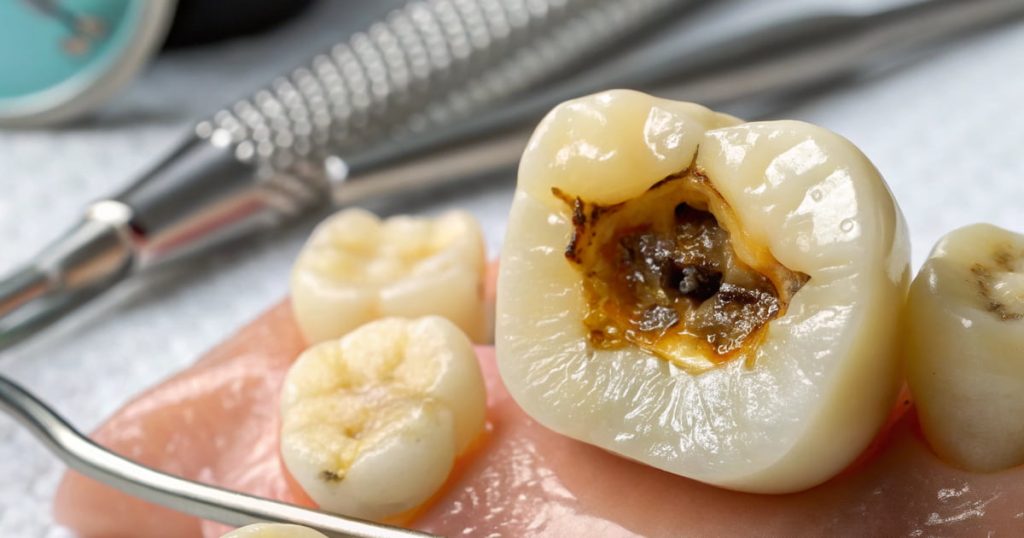
A black spot on a tooth does not always mean you have a cavity. Dark areas can come from tooth decay, surface staining, tartar buildup, natural grooves in the tooth, or changes in the enamel. Because several of these conditions can look similar, appearance alone is not enough to tell whether a black spot is harmless or needs dental treatment.
If you notice a new black spot, a tiny dark dot that is getting larger, sensitivity, pain, or a visible hole in the tooth, a dental examination can help determine the cause. In this guide, we explain common reasons for black spots on teeth, how dentists distinguish stains from decay, possible treatment options, and when it is worth getting the area checked.
Why Do Black Spots on Teeth Appear?
Black spots can develop for several reasons. Some involve the outer surface of the tooth, while others may be associated with tooth decay or deposits around the teeth and gums. The location, texture, symptoms, and whether the area is changing over time can all help a dentist determine what is causing it.
Tooth Decay and Cavities
Tooth decay begins when bacteria in dental plaque use sugars and starches from food and drinks to produce acids that remove minerals from enamel. Early decay may initially appear as a white area. As the process progresses, discoloration can become brown or black, and eventually a hole or cavity can develop.
A dark spot by itself does not prove that a cavity is present. A dentist may examine the area for changes in the tooth surface and, when appropriate, use dental X-rays to look for decay that cannot be fully assessed by appearance alone.

Plaque and Tartar Buildup
Plaque is a sticky film that continually forms on teeth. If plaque is not removed effectively, it can harden into calculus, commonly called tartar. Tartar can collect near the gumline and between teeth and may become visibly discoloured, especially when it picks up pigments from foods, drinks, or tobacco.
Once plaque has hardened into tartar, regular brushing alone cannot reliably remove the deposit. Professional dental cleaning may be needed.
Surface Stains
Coffee, tea, red wine, tobacco, and other strongly pigmented products can contribute to external tooth staining. Stains can sometimes settle into small pits or grooves and look like a tiny black dot even when the underlying tooth is not decayed.
If discoloration is mainly cosmetic, your dentist can determine whether professional cleaning, polishing, or a suitable teeth whitening option is appropriate. Whitening does not treat tooth decay, so the cause of a dark area should be identified first.
Natural Grooves, Pits, or Enamel Changes
Back teeth naturally contain grooves and pits where pigments can collect. Developmental changes in enamel can also affect a tooth’s colour or surface. A dark groove therefore is not automatically a cavity, but deep pits and fissures are also areas where decay can develop, which is why an examination may be useful when a spot is new or changing.
Are Black Spots on Teeth Always Cavities?
No. A black spot on a tooth is not always a cavity. It may be a surface stain, tartar, pigmentation within a natural groove, an enamel change, or tooth decay. The important point is that these causes can be difficult to distinguish at home.
According to the National Institute of Dental and Craniofacial Research, signs of tooth decay can include white, brown, or black staining, and more advanced decay may create a visible hole. Dentists diagnose decay through examination and may use X-rays when needed.
Learn more about the tooth-decay process from the National Institute of Dental and Craniofacial Research.

What If There Is a Tiny Black Spot on a Tooth but No Pain?
A tiny black spot with no pain can still have several explanations. Early tooth decay often causes few or no symptoms, but a small dark mark can also be staining or pigmentation in a natural groove. The absence of pain therefore does not confirm that the tooth is healthy, and it also does not mean that the spot is definitely a cavity.
Consider having the area examined if the spot is new, appears to be getting larger, feels rough or irregular, or is accompanied by sensitivity. A dentist can determine whether monitoring, cleaning, preventive care, or restorative treatment is appropriate.
How Are Black Spots on Teeth Treated?
Treatment depends on what is causing the discoloration. A stain, tartar deposit, early enamel change, and established cavity are different conditions and may require different approaches.
Professional Cleaning for Plaque, Tartar, or Some Surface Stains
If the dark area is caused by tartar or removable surface staining, professional cleaning or polishing may improve its appearance. Your dentist or dental hygienist can also identify areas where plaque is accumulating and discuss ways to improve home care.
Fluoride and Preventive Care for Early Decay
Decay that is still at an early stage, before a cavity or hole has formed, may sometimes be stopped or reversed through remineralization. Fluoride helps strengthen enamel and supports this process. Once the enamel has broken down and a cavity has formed, the damaged area generally requires restorative dental treatment.
The NIDCR tooth-decay guide explains the difference between early mineral loss and a formed cavity.
Dental Fillings for Cavities
If examination confirms that a cavity has formed, the dentist may remove the decayed tooth tissue and restore the area with a dental filling. The recommended restoration depends on the location and extent of the damage and the condition of the remaining tooth.
Treatment for Deeper Tooth Decay
If decay has progressed deeper into the tooth, treatment may be more involved. Depending on the diagnosis and whether the tooth can be restored, a dentist may discuss options such as root canal treatment, a crown, or, when a tooth cannot reasonably be saved, extraction. The appropriate treatment can only be determined after evaluating the individual tooth.
Whitening or Polishing for Cosmetic Stains
If the tooth is healthy and the discoloration is a surface stain, polishing or cosmetic treatment may be considered. Whitening products should not be used as a substitute for diagnosing a dark spot that could be decay. If you are interested in cosmetic options, see our guide to teeth whitening and its alternatives.

When Should a Black Spot Be Checked by a Dentist?
It is reasonable to arrange a dental examination when a black or dark spot is new, changing, or accompanied by symptoms. Signs that deserve particular attention include:
- Tooth sensitivity to hot, cold, or sweet foods and drinks.
- Toothache or pain when biting or chewing.
- A visible pit, hole, crack, or rough area around the dark spot.
- A spot that appears to be getting larger or changing.
- Swelling, tenderness, or redness around the affected tooth or gum.
- Facial swelling, fever, or other signs that may indicate a dental infection.
Tooth decay can initially cause no symptoms, so a painless black spot should not automatically be ignored. At the same time, a dark mark is not enough to diagnose a cavity without an examination.
Concerned About a Black Spot on a Tooth?
A dental examination can help determine whether the dark area is staining, tartar, tooth decay, or another change in the tooth. Contact Emergency Dental Office to arrange an assessment.
How to Help Prevent Tooth Decay and Dark Spots
Not every black spot is preventable because natural tooth anatomy and enamel characteristics vary. However, reducing plaque buildup, tooth decay, and external staining can lower the chance of developing many common types of dark discoloration.
Brush Twice a Day With Fluoride Toothpaste
Brush your teeth twice daily using fluoride toothpaste. Fluoride strengthens enamel and can help prevent tooth decay from progressing. For additional guidance, see the American Dental Association’s cavity-prevention information.
Clean Between Your Teeth Regularly
A toothbrush cannot effectively clean every surface between adjacent teeth. Floss or another interdental cleaner can help remove plaque from these areas as part of a regular oral hygiene routine.

Limit Frequent Sugary Foods and Drinks
Bacteria in plaque use sugars and starches to produce acids that attack tooth enamel. Limiting frequent exposure to sugary foods and drinks, along with good oral hygiene, can help reduce the risk of tooth decay.
Reduce Exposure to Staining Products
Coffee, tea, red wine, tobacco, and other highly pigmented products can contribute to external staining. Drinking water after strongly coloured beverages may help rinse pigments from the mouth, but it does not replace brushing, interdental cleaning, or professional dental care.
Avoid Tobacco
Tobacco use is associated with stained teeth as well as more serious oral-health risks, including gum disease. If you use tobacco, quitting benefits both oral and overall health.
Keep Up With Dental Examinations and Cleanings
Regular dental examinations can help identify changes that may not yet be causing pain, while professional cleaning can remove deposits that cannot be eliminated through home brushing alone. The appropriate recall schedule varies according to individual oral-health needs.
Black Spot or Cavity: The Bottom Line
A black spot on a tooth can be caused by tooth decay, but it can also be staining, tartar, a natural groove, or another enamel-related change. You cannot reliably determine the cause from colour alone.
If a dark spot is new, growing, sensitive, painful, or associated with a visible hole or swelling, arrange a dental examination rather than trying to cover the discoloration with whitening products. Identifying the cause first allows treatment, if needed, to be matched to the actual condition of the tooth.
If you are near North York or Thornhill and would like the area assessed, you can contact Emergency Dental Office or call (905) 764-5399.
Frequently Asked Questions
-
Does a black spot on a tooth always mean a cavity?
No. A black spot may be caused by tooth decay, but stains, tartar, natural grooves, and enamel changes can also look dark. A dental examination can help determine the cause.
-
What does a tiny black spot on a tooth with no pain mean?
A painless black dot may be staining or pigment in a natural groove, but early tooth decay can also cause few or no symptoms. If the spot is new, changing, or concerning, have it examined rather than relying on appearance alone.
-
Can a black spot on a tooth go away?
It depends on the cause. Some surface stains may improve with professional cleaning or polishing. Very early tooth decay before a cavity forms may sometimes be stopped or reversed with remineralization and fluoride. Once a cavity has formed, restorative dental treatment is usually needed.
-
How does a dentist know whether a black spot is decay?
A dentist examines the tooth, the surface around the spot, and any associated symptoms. Dental X-rays may also be used when needed to look for decay that cannot be fully evaluated visually.
-
How are black spots on teeth removed?
Treatment depends on the cause. Cleaning or polishing may remove some stains or deposits, while a cavity may require a filling. Deeper decay can require more extensive treatment. The cause should be diagnosed before treatment is selected.

