
If you are searching for antibiotics for tooth infection at 2 a.m. with a throbbing jaw, you are asking the most reasonable question in dentistry: will a pill fix this? The honest answer is: sometimes antibiotics are part of the treatment — but they are never the treatment itself. An infected tooth needs the source dealt with, and no antibiotic can do that job.
This guide explains when antibiotics genuinely help, when they do not, and why taking leftover medication on your own can make things worse. It also covers the warning signs that mean you need a hospital, not a waiting room. If the tooth can be saved, root canal treatment is often the definitive step — this post explains where medication fits around that decision.
- What a tooth infection actually is
- When are antibiotics for a tooth infection actually prescribed?
- When antibiotics are not the answer
- Why antibiotics can’t cure an abscessed tooth
- The leftover-antibiotics trap
- Red flags: hospital, not a waiting room
- What the emergency visit involves
- Frequently asked questions
- References
What a tooth infection actually is
A tooth infection (an abscess) happens when bacteria reach the soft tissue inside a tooth — through deep decay, a crack, or a failing old filling — and the tissue dies and becomes infected. Because the inside of a tooth is a closed space, pressure builds, which is why abscess pain is often intense and throbbing. The infection can remain contained at the root tip for a time, or it can spread into the surrounding bone and soft tissues. Which of those is happening is exactly what determines whether antibiotics belong in the plan.
When are antibiotics for a tooth infection actually prescribed?
Dentists prescribe antibiotics when there are signs the infection is spreading or affecting the body beyond the tooth itself — for example:
- Facial or jaw swelling that is increasing
- Fever, or feeling generally unwell along with tooth pain
- Swollen glands or difficulty opening the mouth fully
- A spreading infection in a patient whose immune system is compromised
Even then, antibiotics are prescribed after an assessment, and they support the real treatment — they do not replace it. Guidance from the Canadian Dental Association and the Ontario Dental Association is consistent on this: antibiotics are an adjunct, used when the clinical picture calls for them.
When antibiotics are not the answer
For many toothaches, antibiotics are not prescribed at all — and that is good practice, not a refusal of care. Pain on its own, a contained abscess with no spreading signs, or pain from a dying nerve inside a tooth does not improve with antibiotics, because the problem is the tooth itself. Prescribing anyway exposes you to side effects and contributes to antibiotic resistance, without treating anything. If your dentist does not prescribe antibiotics, ask them to explain what they found — the reasoning should be easy to follow.
Why antibiotics can’t cure an abscessed tooth
Antibiotics travel in the bloodstream. The infected tissue inside a dead tooth has essentially no blood supply left, so the medication cannot reach the source in any meaningful concentration. It can calm a spreading infection in the tissues around the tooth — which is valuable — but the bacteria inside the tooth remain. That is why the definitive treatments are physical: draining the abscess, removing the infected tissue through root canal treatment, or removing the tooth. Our guide to the signs a tooth infection has spread explains the escalation symptoms to watch for while you wait to be seen.
One specific note: if your question is about medication after an extraction, that is a different situation with its own guidance — see our post on antibiotics after tooth extraction.
The leftover-antibiotics trap
It is tempting to start the amoxicillin left over from last year’s prescription. Please do not. The medication may be the wrong one for a dental infection, the dose and remaining quantity are unlikely to complete a proper course, it may be expired, and taking it can partially suppress symptoms while the infection continues — delaying the treatment that would actually resolve it, sometimes until it becomes a much bigger problem. The same applies to antibiotics belonging to someone else. If you think you need antibiotics for a tooth infection, the safe route is an assessment, in person, where the tooth itself is examined.
Red flags: hospital, not a waiting room
Some symptoms mean the infection is becoming dangerous, and a dental office is not the right destination. Go to a hospital emergency department or call 911 if you have:
- Difficulty breathing or swallowing
- Facial swelling spreading toward the eye or down the neck
- Fever together with rapidly increasing swelling
- Bleeding that will not stop
- A jaw injury or suspected fracture
These situations can progress quickly. Do not wait for a dental appointment if any of them describe you.
What the emergency visit involves
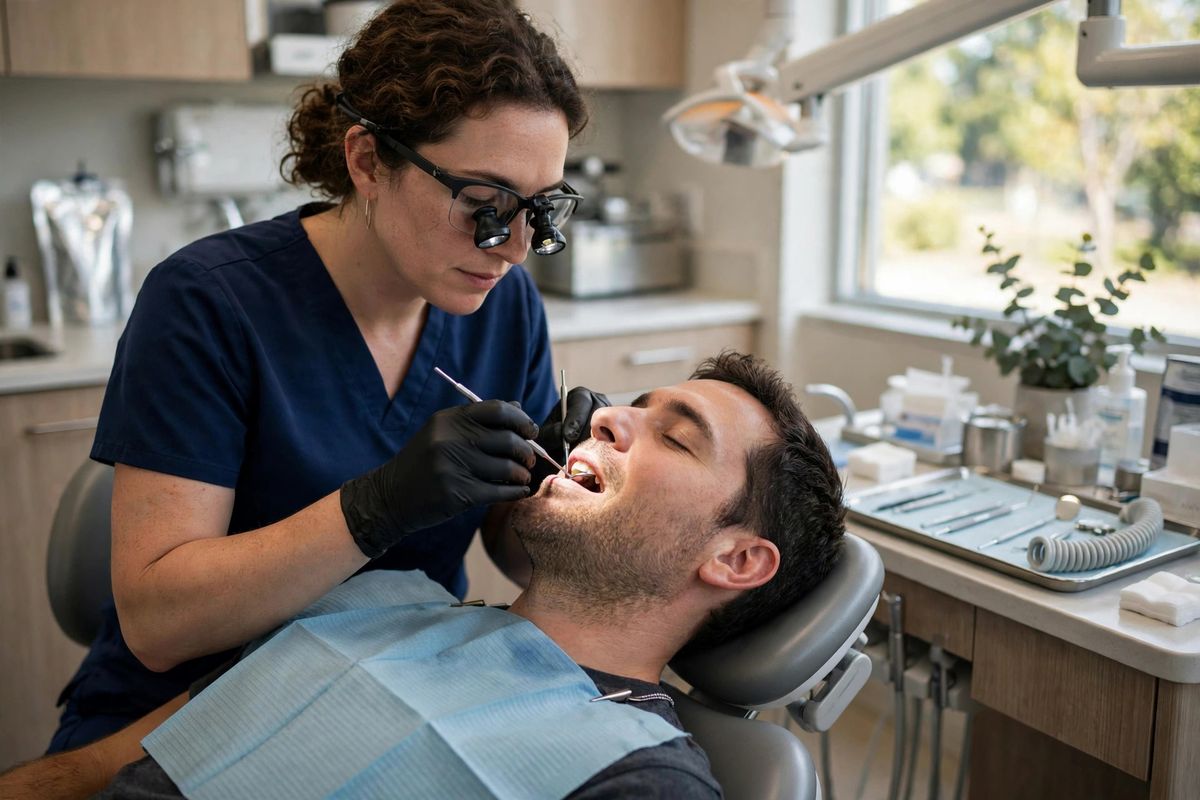
At Emergency Dental Office in Thornhill, an infected-tooth visit starts with an examination and X-rays to find the source and judge whether the infection is contained or spreading. From there, the dentist explains the options honestly: whether the tooth can be saved with root canal treatment, whether it needs to come out, and whether antibiotics are warranted in your specific case — prescribed then, if they are, with clear instructions. If the tooth cannot be saved, extraction is discussed plainly, including what happens next. Call us at (905) 764-5399 if you are in pain now.
Frequently asked questions
Can I take leftover amoxicillin from a past prescription?
No. It may be the wrong medication, an incomplete course, or expired — and partial treatment can mask symptoms while the infection continues. Antibiotics for a tooth infection should only be taken when prescribed for that infection, after an assessment.
How fast do antibiotics work on a tooth infection?
When antibiotics are appropriate, patients often begin to feel improvement in the surrounding symptoms — swelling, fever, general unwellness — within a day or two. That improvement does not mean the tooth is cured; the source inside the tooth still needs treatment, or the infection will return.
If the swelling goes down on antibiotics, is the tooth fine?
No. Antibiotics can calm the tissues around the tooth while the bacteria inside it remain untouched. The swelling settling is a sign the medication is doing its supporting job — the tooth still needs root canal treatment or extraction to resolve the cause.
What happens at the emergency visit for an infected tooth?
An examination and X-rays to locate the source, an honest explanation of whether the tooth can be saved, and a treatment plan. If the infection is spreading, antibiotics may be prescribed as part of that plan. Definitive treatment — drainage, root canal treatment or extraction — is what resolves the infection.
Why won’t my dentist just prescribe antibiotics over the phone?
Because the decision depends on findings that require an examination: whether the infection is contained or spreading, the state of the tooth, and your medical history. Responsible prescribing standards in Ontario, overseen by the Royal College of Dental Surgeons of Ontario, expect that assessment to come first.
Can antibiotics save my tooth?
No medication can save an infected tooth on its own. Saving the tooth means removing the infected tissue from inside it — root canal treatment — and restoring it. Antibiotics protect the tissues around the tooth while that happens; they do not sterilize the tooth itself.
Are there risks to taking antibiotics I don’t need?
Yes. Side effects range from stomach upset and allergic reactions to more serious complications, and unnecessary use contributes to antibiotic resistance — a real public-health concern tracked by Health Canada. That is why dentists prescribe them for specific clinical reasons, not as a default.
When should I go to the hospital instead of a dentist?
If you have difficulty breathing or swallowing, swelling spreading toward your eye or neck, fever with rapidly increasing swelling, uncontrolled bleeding, or a jaw injury, go to a hospital emergency department or call 911. Those signs mean the situation can progress faster than a dental appointment can address.
References
- Canadian Dental Association — guidance on antibiotic use in dentistry and dental abscess care.
- Ontario Dental Association — patient resources on tooth infections and emergency care.
- Royal College of Dental Surgeons of Ontario — prescribing standards for Ontario dentists; verify registration on the public register.
- Canada.ca / Health Canada — information on antimicrobial resistance and safe medication use.