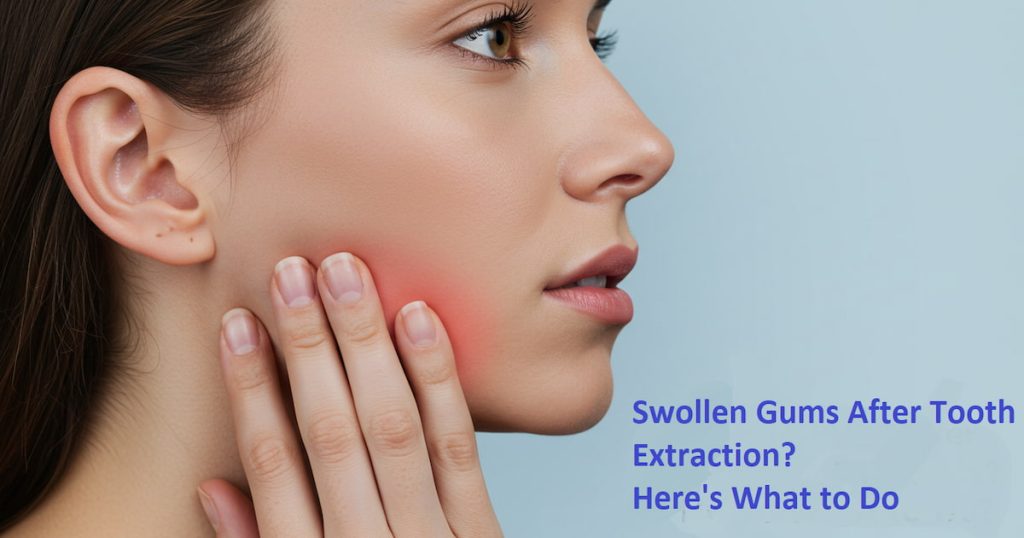
Swollen gums after tooth extraction can occur as the tissues around the extraction site begin to heal. The amount of swelling varies depending on the tooth, the complexity of the extraction, and your individual healing response.
What matters most is how the swelling changes over time. Mild swelling that gradually improves can be part of normal recovery, while swelling that becomes worse, returns after improving, or occurs with fever, drainage, increasing pain, or facial swelling should be assessed by a dental professional.
Why Do Gums Swell After Tooth Extraction?
Swelling is part of the body’s inflammatory response after dental treatment or oral surgery. Removing a tooth affects the gum and surrounding tissues, and the area may temporarily feel tender, puffy, or sore while healing begins.
The degree of swelling depends on several factors, including the position of the tooth, whether a simple or surgical extraction was required, and how your body responds to the procedure. The important distinction is whether symptoms are gradually improving or becoming more severe.

Common Causes of Swollen Gums After Tooth Extraction
Swelling after an extraction can have several causes. Some are expected during healing, while others may require a dental examination.
Normal Healing and Inflammation
Some tenderness and swelling during the early healing period is common after a tooth is removed. The area should generally become more comfortable as recovery progresses rather than becoming increasingly painful or swollen.
- Mild puffiness or tenderness around the extraction site
- Discomfort that gradually improves rather than worsens
- Minor bruising or tenderness following a more involved extraction
Your dentist can explain what degree of swelling is expected based on the type of extraction you had.
Wondering how the extraction site changes during recovery? Read: How Long Does It Take for the Hole to Close After a Tooth Extraction?
Infection or Dry Socket
Increasing swelling or pain can sometimes indicate a complication. A bacterial infection and dry socket are different conditions and require different treatment. Infection may be associated with worsening swelling, drainage, fever, or feeling unwell. Dry socket occurs when the protective blood clot in the socket is lost or breaks down too early and can cause significant pain.
| Symptom | Why It Should Be Assessed |
| Severe or increasing pain | May indicate dry socket, infection, or another post-extraction complication. |
| Swelling that becomes worse instead of improving | May require examination to determine whether infection or another problem is present. |
| Pus, persistent drainage, or a foul taste | Can be associated with infection. |
| Fever or feeling generally unwell | May indicate systemic involvement and warrants prompt assessment. |
| Increasing facial or neck swelling | Requires urgent evaluation, particularly if swallowing or breathing becomes difficult. |
Important: Difficulty breathing or swallowing, rapidly increasing facial or neck swelling, or other severe symptoms require urgent medical attention.
Food Debris or Irritation Around the Extraction Site
Food particles and plaque can sometimes irritate the tissues around a healing extraction site. However, the socket should not be aggressively cleaned or disturbed. Follow the oral-hygiene and rinsing instructions provided by your dentist.
- Avoid picking at or probing the socket
- Keep the rest of your mouth clean as instructed
- Contact your dentist if swelling, pain, drainage, or a bad taste is getting worse
Food choices can also make the early recovery period easier. See: Soft Foods After Wisdom Tooth Extraction.
Is Gum Swelling 2 Weeks After Tooth Extraction Normal?
Swelling that is still clearly present two weeks after an extraction is worth discussing with your dentist, particularly if it has not been steadily improving. Recovery varies according to the tooth, the procedure, and the individual patient, so the timing alone does not identify the cause.
Persistent swelling may be related to ongoing inflammation, irritation, food or debris around the healing site, infection, or another local issue. A dental examination can help determine what is happening rather than assuming that antibiotics or another specific treatment is required.
Contact a dental professional sooner if swelling is increasing or is accompanied by worsening pain, pus or drainage, fever, a foul taste or odour, facial swelling, or difficulty opening the mouth. Difficulty breathing or swallowing requires urgent medical assessment.
Depending on the findings, your dentist may recommend examination of the socket, imaging, local treatment, medication, or referral. Treatment should be based on the cause of the symptoms.
Concerned About Swelling After an Extraction?
If swelling or pain is getting worse instead of improving, contact Emergency Dental Office for an assessment. We can examine the extraction site and explain whether additional treatment is appropriate.
How to Manage Swelling After Tooth Extraction
Your own post-extraction instructions should take priority because aftercare can differ depending on the procedure. In general, protecting the socket and following the instructions provided by your dental team supports normal healing.
Cold Compresses and Comfort Measures
A cold pack placed on the outside of the cheek may be recommended during the early recovery period to help with swelling and discomfort. Place a cloth between the cold pack and your skin and follow the instructions provided by your dentist.

If you need medication for post-extraction discomfort, follow the instructions provided by your dentist or the directions for any medication that has been recommended for you. Ask a dentist, physician, or pharmacist if you are unsure which medication is appropriate based on your medical history or other medicines you take.
Oral Hygiene and Rinsing
The extraction site needs to be protected while the blood clot and surrounding tissues begin to heal. Avoid vigorous rinsing or disturbing the socket during the early recovery period. After the first day, gentle warm salt-water rinsing may be recommended as part of aftercare.
| Early Recovery | As Healing Progresses |
| Avoid vigorous rinsing, spitting, or disturbing the socket. | Follow your dentist’s instructions for gentle rinsing and oral hygiene. |
| Protect the extraction area while the clot stabilizes. | Continue brushing the rest of your teeth carefully and keep the mouth clean. |
| Avoid using straws during the period specified by your dentist. | Gradually return to your normal oral-care routine as advised. |
Aftercare reminder: Instructions can vary depending on the type of extraction. Follow the directions given for your specific procedure.
When to Seek Professional Help
Contact your dentist if your recovery is not progressing as expected, particularly when swelling or pain becomes worse rather than gradually improving.
- Swelling is increasing, spreading, or returning after it had begun to improve
- Pain becomes severe or significantly worse
- You notice pus, persistent drainage, or a new foul taste or odour
- You develop fever or feel generally unwell
- You develop increasing difficulty opening your mouth
- You have persistent or unexpected numbness or altered sensation
Seek urgent medical attention for difficulty breathing or swallowing or rapidly increasing facial or neck swelling. Increasing swelling, fever, pus, and other worsening signs can require professional assessment.
For more information about recovery, read: Recovery After Tooth Extraction.

Conclusion
Some gum swelling after a tooth extraction can be part of normal healing. The key is whether the swelling and discomfort are gradually improving. Follow the aftercare instructions provided for your procedure and avoid disturbing the extraction site while it heals.
If swelling becomes worse, persists longer than expected, or occurs with increasing pain, drainage, fever, facial swelling, or other concerning symptoms, contact a dental professional for an assessment. Emergency Dental Office provides urgent dental assessments at our Thornhill clinic near North York.
FAQ
-
How do you manage swollen gums after tooth extraction?
Follow the aftercare instructions provided by your dentist. A cold pack may be recommended during the early recovery period, and gentle oral hygiene helps protect the healing area. Contact your dentist if swelling becomes worse instead of gradually improving or occurs with fever, drainage, increasing pain, or facial swelling.
-
How long does gum swelling last after extraction?
Recovery varies according to the type of extraction and the individual patient. Some swelling is common during the early healing period and should generally improve as recovery progresses. Swelling that becomes worse, returns after improving, or remains concerning should be assessed by a dentist.
-
Is gum swelling 2 weeks after tooth extraction normal?
Persistent swelling two weeks after an extraction is worth discussing with your dentist, especially if it has not been steadily improving. An examination can determine whether the area is simply healing slowly or whether irritation, infection, or another problem is present.
-
How can I support healing after a tooth extraction?
Follow the instructions provided by your dental team, protect the extraction site, maintain gentle oral hygiene, avoid disturbing the socket, and follow the recommended diet and activity guidance. Contact your dentist if recovery is not progressing as expected.
Concerned about swelling or other symptoms after an extraction? Contact your dentist for advice based on your procedure and individual recovery.